The Essential Guide to Marine Lead-Acid Batteries: Durability & Corrosion Resistance
AUG.07,2025Lead-Acid Batteries for Golf Carts: Key Benefits & Trends
AUG.06,2025Energy Storage Solutions: Lead-Aide Batteries vs. Lithium-Ion
JUL.28,2025Understanding AGM Lead-Acid Batteries for Backup Power
JUL.28,2025Flooded Lead-Acid Batteries for Renewable Energy Storage
JUL.28,2025Gel Lead-Acid Batteries: A Long-Lasting Solution for Off-Grid Power
JUL.23,2025The Role of Lead-Acid Batteries in Electric Golf Carts
JUL.21,2025Telecom Power Systems: The Role of Lead-Acid Batteries
JUL.15,2025Lead-Acid Batteries in Power Tools: Dependability and Performance
JUL.15,2025Choosing Lead-Acid Batteries for Medical Equipment Backup
JUL.15,2025 Spaceflight Power Supply Co., Ltd.
Tel: +86-760-22555873
Fax: +86-760-22555873
E-mail: [email protected]
Add: 2108, Haigang City Office Building, No.1 Shengping East Road, Xiaolan Town, Zhongshan City, Guangdong Province
Lead-acid batteries have been powering homes, vehicles, and industries for over a century, owing much of their success to their simplicity, reliability, and cost-effectiveness. One of the most significant roles they play today is in off-grid living, where they provide a reliable means of energy storage for those who live independently of public utilities. In this article, we will explore the science behind lead-acid batteries and examine how they are used in off-grid systems to provide sustainable energy solutions.
To grasp why lead-acid batteries are so widely used, it’s essential to understand how they work on a basic scientific level.
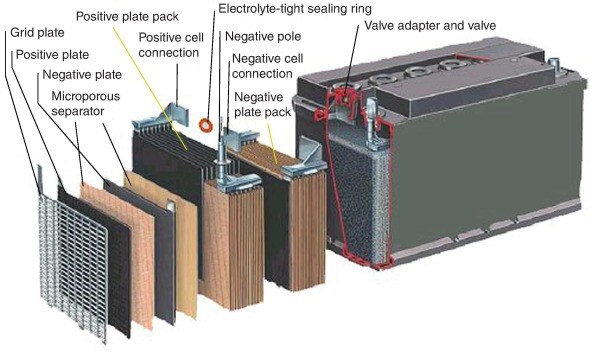
The Basic Components
A lead-acid battery consists of several key components:
The Chemical Reaction
The operation of a lead-acid battery relies on the conversion of chemical energy into electrical energy. This happens through a series of electrochemical reactions during charging and discharging:
Efficiency and Lifespan
Lead-acid batteries operate at an efficiency of about 80-85%, which means that around 80% of the energy used in charging can be recovered during discharge. While they do not have the same energy density as newer technologies like lithium-ion batteries, lead-acid batteries are still favored in off-grid and backup applications due to their affordability and reliable performance.
Lead-acid batteries have a limited lifespan, typically ranging from 3 to 5 years, depending on the usage and maintenance. Their lifespan is influenced by factors such as the depth of discharge (DoD), temperature, and charging protocols.

Off-grid living refers to a lifestyle where individuals or communities operate independently of public utility services like electricity grids, water systems, and sewage treatment. People who choose off-grid living often rely on renewable energy sources like solar, wind, or hydro power to generate electricity. However, intermittent renewable energy sources require storage solutions to ensure a continuous power supply when the sun isn’t shining, the wind isn’t blowing, or during periods of low energy generation.
This is where lead-acid batteries come into play.
For off-grid homes that use solar or wind energy systems, lead-acid batteries are commonly used to store electricity generated during peak production times. When the sun is shining or the wind is blowing, solar panels or wind turbines generate more electricity than is needed for immediate use. The excess energy is stored in lead-acid batteries, which can then provide power when demand exceeds the current generation capacity, such as during the night or on cloudy days.
For instance, a home with a solar power system might produce 10 kWh of electricity during the day, but only use 5 kWh. The remaining 5 kWh is stored in the lead-acid battery, which can then supply electricity when the panels are not generating power. This allows for a constant and reliable power source without the need to be connected to the main electricity grid.
Not all lead-acid batteries are suitable for off-grid applications. In off-grid living, deep-cycle lead-acid batteries are commonly used because they are designed to be discharged and recharged repeatedly, unlike starting batteries (which are designed to deliver a short burst of power). Deep-cycle lead-acid batteries can handle deeper discharges, meaning they can store more energy and provide a longer runtime before needing to be recharged.
They come in two main types:
When designing an off-grid energy system with lead-acid batteries, it is essential to consider factors like the energy needs of the household, available solar or wind generation capacity, and the desired autonomy (how many days of backup power you want). The battery bank needs to be sized appropriately to ensure it can store enough energy to meet your power requirements during periods of low renewable generation.
For example, if a family consumes 5 kWh of electricity per day and their solar panels generate 7 kWh on a sunny day, they might need enough battery storage to cover their needs for two or three days of cloudy weather. The required battery bank capacity will depend on the depth of discharge (DoD) of the batteries and the specific energy storage characteristics of the system.
Despite newer technologies like lithium-ion batteries entering the market, lead-acid batteries remain a popular choice for off-grid living. Here’s why:
While lead-acid batteries have many advantages, there are some challenges and limitations to consider:
Lead-acid batteries have proven to be an indispensable part of off-grid living, providing affordable and reliable energy storage for homes that rely on renewable sources like solar and wind power. Understanding the science behind how these batteries work and their role in energy systems is essential for anyone considering off-grid living. Despite some limitations, their cost-effectiveness, proven technology, and flexibility ensure that lead-acid batteries will remain a key player in the off-grid energy landscape for years to come.
Spaceflight Power was founded in 1994 and named Zhongshan Spaceflight Power supply Co,. Ltd. In 2006, the company’s production base moved to Jiangxi Province for a larger production space with 120,000 square meters.
Learn About Spaceflight Power Learn About Spaceflight PowerCopyright © 2026 - Spaceflight Power Supply Co., Ltd. ALL RIGHTS RESERVED Shipping PolicyReturn PolicyPrivacy Policy