The Essential Guide to Marine Lead-Acid Batteries: Durability & Corrosion Resistance
AUG.07,2025Lead-Acid Batteries for Golf Carts: Key Benefits & Trends
AUG.06,2025Energy Storage Solutions: Lead-Aide Batteries vs. Lithium-Ion
JUL.28,2025Understanding AGM Lead-Acid Batteries for Backup Power
JUL.28,2025Flooded Lead-Acid Batteries for Renewable Energy Storage
JUL.28,2025Gel Lead-Acid Batteries: A Long-Lasting Solution for Off-Grid Power
JUL.23,2025The Role of Lead-Acid Batteries in Electric Golf Carts
JUL.21,2025Telecom Power Systems: The Role of Lead-Acid Batteries
JUL.15,2025Lead-Acid Batteries in Power Tools: Dependability and Performance
JUL.15,2025Choosing Lead-Acid Batteries for Medical Equipment Backup
JUL.15,2025 Spaceflight Power Supply Co., Ltd.
Tel: +86-760-22555873
Fax: +86-760-22555873
E-mail: [email protected]
Add: 2108, Haigang City Office Building, No.1 Shengping East Road, Xiaolan Town, Zhongshan City, Guangdong Province
When it comes to off-grid living, where connection to the electrical grid is either impractical or impossible, having a reliable energy storage system becomes crucial. Among the many battery types available, lead-acid batteries have been a staple for off-grid residential systems for decades. Despite the rise of newer technologies like lithium-ion batteries, lead-acid batteries continue to be a popular and cost-effective choice for storing energy generated from renewable sources like solar or wind power.
This article explores the advantages, applications, and considerations of using lead-acid batteries in off-grid residential systems and why they remain a strong contender for energy storage in off-grid settings.

Lead-acid batteries are one of the oldest and most widely used types of rechargeable batteries. They are composed of:
The basic working principle of a lead-acid battery is the chemical reaction between the lead plates and the electrolyte. When the battery is charging, lead sulfate forms on the plates, and during discharge, it converts back to lead and sulfuric acid, releasing energy.
Why Choose Lead-Acid Batteries for Off-Grid Residential Systems?
One of the most significant advantages of lead-acid batteries over other types, such as lithium-ion, is their lower initial cost. For homeowners looking for a more budget-friendly solution for storing energy, lead-acid batteries provide a cost-effective choice.
Lead-acid batteries have been around for over 150 years and have an established track record for reliability. They are especially well-suited for off-grid residential systems, where consistency is key for providing power in remote locations.
Lead-acid batteries are widely available, both online and locally, making them easy to purchase and replace when needed. They are used in many industries, including automotive, telecom, and backup power systems, so replacement parts and servicing are widely accessible.
For off-grid homes located in areas that experience cold winters, lead-acid batteries tend to perform better in low temperatures than lithium-based systems. While performance degradation in lead-acid batteries is slower in colder conditions compared to lithium-ion batteries, they are generally more tolerant to temperature fluctuations.
Deep cycle lead-acid batteries are designed to be discharged over a long period, making them ideal for off-grid residential applications. These batteries can be used to store energy produced by solar or wind power and discharge gradually to power appliances, lighting, and other household systems.
While lead-acid batteries offer several advantages, there are also some important considerations to keep in mind when using them in off-grid residential systems.
One of the challenges of using lead-acid batteries is that they require regular maintenance to ensure optimal performance and longevity. This includes:
While sealed types like AGM (Absorbent Glass Mat) and gel batteries require less maintenance, flooded lead-acid batteries still need attention to keep them in good working condition.
Although lead-acid batteries are affordable, they have a relatively shorter lifespan compared to newer technologies like lithium-ion batteries. Deep cycle lead-acid batteries typically last between 3 to 5 years under regular use, while lithium-ion batteries can last 10 years or more.
Lead-acid batteries have a lower charge/discharge efficiency (about 80-85%) compared to lithium-ion batteries, which often reach efficiencies of 95% or higher. This means that more energy is lost during charging and discharging, reducing the overall energy efficiency of your off-grid system.
Lead-acid batteries are bulkier and heavier than lithium-ion batteries, which can be a challenge in off-grid applications where space is limited, and weight is a concern. For homes with limited storage space or homes that need to be portable (e.g., RVs or mobile homes), the size and weight of lead-acid batteries can become a drawback.
Lead-acid batteries, particularly flooded ones, contain toxic lead and sulfuric acid, which pose environmental risks if not disposed of properly. While recycling programs for lead-acid batteries are in place, improper disposal can lead to pollution.
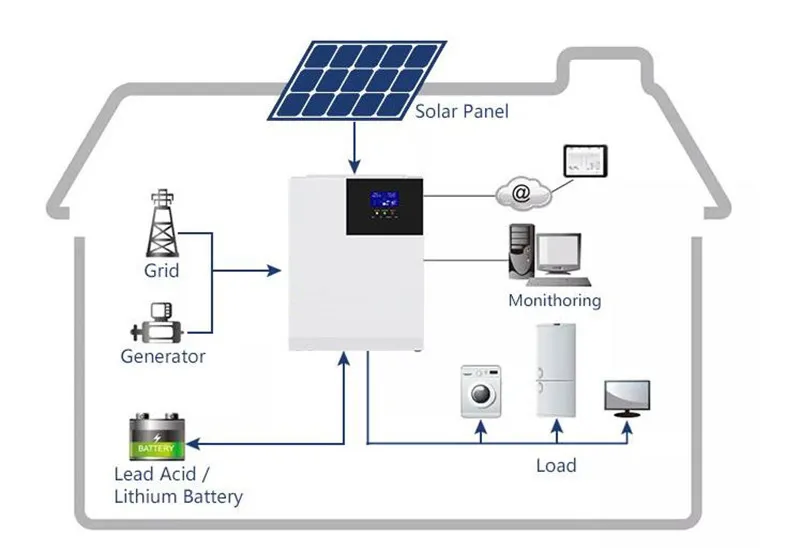
For off-grid systems, lead-acid batteries typically work alongside renewable energy sources like solar panels or wind turbines. Here’s a basic setup:
Lead-acid batteries remain a reliable and cost-effective option for off-grid residential systems, offering a proven and affordable solution for energy storage. Despite their shorter lifespan and need for regular maintenance, their affordability, availability, and durability continue to make them a popular choice for off-grid homes. For those who need a budget-friendly, maintenance-conscious battery system, and live in environments where cold temperatures and space limitations are not a concern, lead-acid batteries provide an effective and reliable solution.
For off-grid homeowners seeking energy independence with renewable energy, lead-acid batteries remain a trusted choice that continues to deliver power when needed most.
Spaceflight Power was founded in 1994 and named Zhongshan Spaceflight Power supply Co,. Ltd. In 2006, the company’s production base moved to Jiangxi Province for a larger production space with 120,000 square meters.
Learn About Spaceflight Power Learn About Spaceflight PowerCopyright © 2026 - Spaceflight Power Supply Co., Ltd. ALL RIGHTS RESERVED Shipping PolicyReturn PolicyPrivacy Policy