The Essential Guide to Marine Lead-Acid Batteries: Durability & Corrosion Resistance
AUG.07,2025Lead-Acid Batteries for Golf Carts: Key Benefits & Trends
AUG.06,2025Energy Storage Solutions: Lead-Aide Batteries vs. Lithium-Ion
JUL.28,2025Understanding AGM Lead-Acid Batteries for Backup Power
JUL.28,2025Flooded Lead-Acid Batteries for Renewable Energy Storage
JUL.28,2025Gel Lead-Acid Batteries: A Long-Lasting Solution for Off-Grid Power
JUL.23,2025The Role of Lead-Acid Batteries in Electric Golf Carts
JUL.21,2025Telecom Power Systems: The Role of Lead-Acid Batteries
JUL.15,2025Lead-Acid Batteries in Power Tools: Dependability and Performance
JUL.15,2025Choosing Lead-Acid Batteries for Medical Equipment Backup
JUL.15,2025 Spaceflight Power Supply Co., Ltd.
Tel: +86-760-22555873
Fax: +86-760-22555873
E-mail: [email protected]
Add: 2108, Haigang City Office Building, No.1 Shengping East Road, Xiaolan Town, Zhongshan City, Guangdong Province
Data centers are the backbone of modern digital infrastructure, supporting everything from cloud computing to financial transactions. To ensure continuous uptime and prevent service disruptions, data centers rely heavily on backup power systems. Among the most commonly used technologies for backup power are high-capacity lead-acid batteries. Despite the rise of alternative battery technologies, lead-acid batteries continue to be a popular choice due to their cost-effectiveness, proven reliability, and capacity for delivering sustained power. However, designing these batteries for high-capacity data center applications involves specific considerations to ensure optimal performance, longevity, and safety.
This article delves into the critical design considerations when integrating high-capacity lead-acid batteries into data center backup power systems.

The primary function of backup power batteries in a data center is to ensure continuous operation during power outages. High-capacity lead-acid batteries must be able to meet the power demands of the data center during an extended period, allowing time for backup generators to start and stabilize.
1.1. Determining Power Requirements
The first step in designing a high-capacity battery system is calculating the required power and runtime. A typical data center will have several critical systems, such as servers, cooling systems, and networking equipment, all of which require reliable backup power. The total power load of these systems must be carefully estimated to size the battery appropriately.
To determine the power capacity needed, engineers must account for:
1.2. Battery Sizing
Once power requirements are known, the capacity of the battery can be determined. This is typically measured in ampere-hours (Ah) or kilowatt-hours (kWh). A key design consideration is ensuring that the batteries can support the load for the necessary runtime while also factoring in the depth of discharge (DoD), which impacts battery lifespan.
For example, if the data center requires 100 kW of power for 30 minutes during an outage, a high-capacity battery system would need to supply approximately 50 kWh of energy. However, to ensure the longevity of the battery, it’s common practice to design the system to provide a little more than the calculated requirement, taking into account factors like aging and inefficiencies.
While lead-acid batteries are often the go-to choice for data center backup, there are different types of lead-acid batteries to consider, each with its own characteristics and benefits.
2.1. Flooded Lead-Acid Batteries
Flooded lead-acid (FLA) batteries are a traditional choice. These batteries offer high power output and can be relatively inexpensive compared to other types. However, they require regular maintenance, including water topping up and periodic equalization charging to ensure performance.
In data centers, the need for constant monitoring and maintenance can be a drawback, as these batteries can lead to downtime and the need for labor-intensive upkeep. For high-capacity applications, flooded lead-acid batteries may be better suited to areas where access and maintenance are easier.
2.2. Sealed Lead-Acid (SLA) Batteries
Sealed lead-acid batteries, including Absorbed Glass Mat (AGM) and Gel batteries, provide the advantage of being maintenance-free. The electrolyte is absorbed into fiberglass mats (in AGM batteries) or gel form (in Gel batteries), eliminating the need for regular water refilling.
SLA batteries are typically preferred in data center environments due to their lower maintenance requirements and enhanced safety features. They are also more reliable in preventing leakage, which is crucial in a data center where any spillage could damage sensitive equipment.
2.3. VRLA (Valve-Regulated Lead-Acid) Batteries
Valve-regulated lead-acid batteries (VRLA) are a type of sealed lead-acid battery that is specifically designed to minimize the need for maintenance. VRLA batteries feature a valve mechanism that regulates the internal pressure and allows for controlled venting in the event of overcharging. These batteries are ideal for data center backup systems as they provide reliable performance and are relatively low-maintenance.

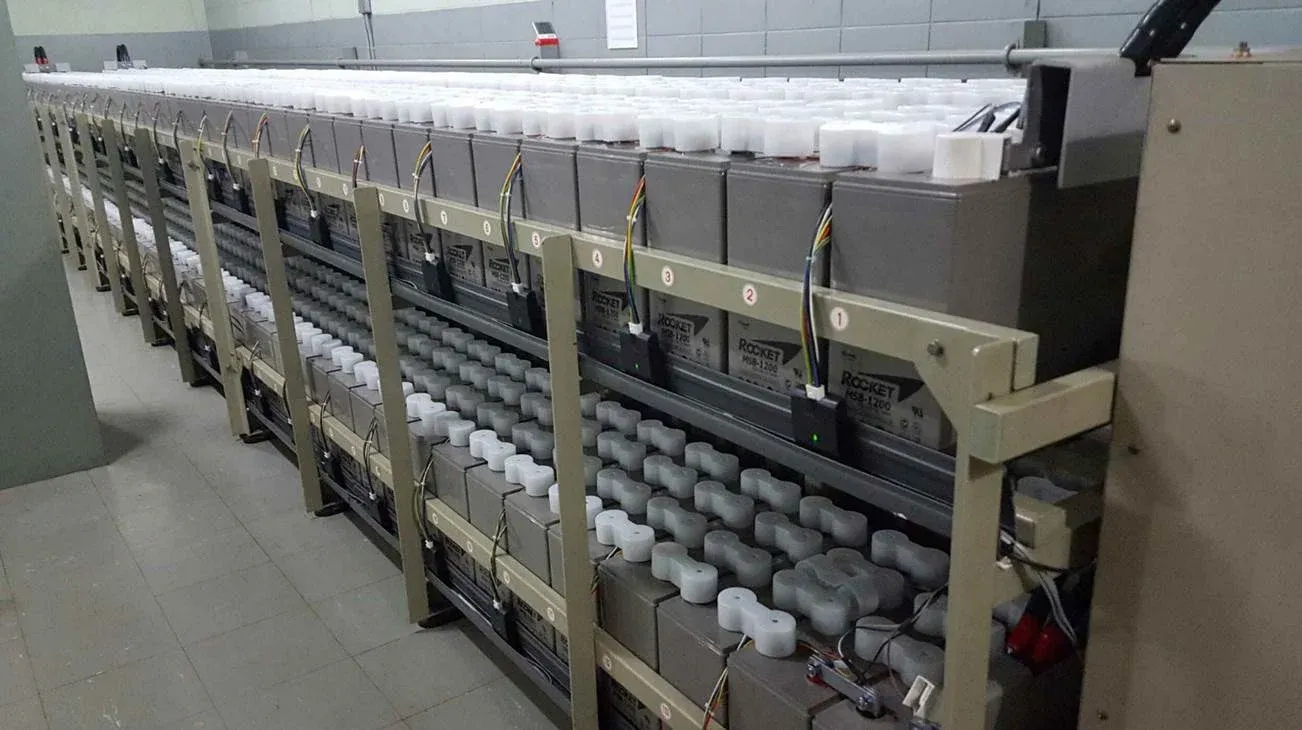
The installation of high-capacity lead-acid batteries in data centers requires careful consideration of space, temperature control, and safety.
3.1. Space Requirements
High-capacity batteries, especially in large data centers, can occupy a significant amount of space. This necessitates dedicated battery rooms or battery enclosures that meet specific requirements for size and accessibility.
Factors to consider:
3.2. Temperature Control
Temperature has a significant impact on the performance and lifespan of lead-acid batteries. High temperatures can accelerate corrosion and chemical degradation inside the battery, reducing efficiency and lifespan. On the other hand, low temperatures can cause reduced charge acceptance and increase internal resistance.
To mitigate these risks, battery rooms should maintain a controlled temperature of around 20–25°C (68–77°F). In colder climates, heating systems may be required, while cooling systems should be installed in warmer climates to maintain the optimal temperature range.
3.3. Safety Features
Data centers handle critical infrastructure, so ensuring the safety of backup power systems is paramount. Lead-acid batteries can pose risks such as thermal runaway, overcharging, and gas emissions. As such, it’s important to integrate various safety features into the system design, such as:
The reliability of a lead-acid battery system in a data center backup application depends significantly on preventative maintenance and real-time monitoring.
4.1. Preventive Maintenance
While sealed lead-acid batteries require minimal maintenance, flooded lead-acid batteries and large VRLA systems may still need regular checks. Preventive maintenance includes:
4.2. Real-Time Monitoring Systems
Advanced Battery Management Systems (BMS) provide data about battery health, capacity, and performance. These systems offer the ability to monitor each battery in real time, helping to identify potential issues before they become critical. Monitoring key parameters such as:
This information can help ensure that backup power systems are always ready for use and can prevent unexpected failures during critical outages.
Designing high-capacity lead-acid batteries for data center backup power systems involves careful consideration of battery type, sizing, space requirements, temperature control, and safety. Lead-acid batteries, particularly VRLA and SLA types, continue to be a cost-effective and reliable solution for ensuring uptime in the data center industry. With proper design, installation, and maintenance, high-capacity lead-acid batteries can provide reliable and long-lasting performance, enabling data centers to operate smoothly even during power outages. By addressing these design considerations, data center operators can ensure their backup systems are both efficient and resilient, reducing the risk of downtime and maintaining continuous service.
Spaceflight Power was founded in 1994 and named Zhongshan Spaceflight Power supply Co,. Ltd. In 2006, the company’s production base moved to Jiangxi Province for a larger production space with 120,000 square meters.
Learn About Spaceflight Power Learn About Spaceflight PowerCopyright © 2026 - Spaceflight Power Supply Co., Ltd. ALL RIGHTS RESERVED Shipping PolicyReturn PolicyPrivacy Policy