The Essential Guide to Marine Lead-Acid Batteries: Durability & Corrosion Resistance
AUG.07,2025Lead-Acid Batteries for Golf Carts: Key Benefits & Trends
AUG.06,2025Energy Storage Solutions: Lead-Aide Batteries vs. Lithium-Ion
JUL.28,2025Understanding AGM Lead-Acid Batteries for Backup Power
JUL.28,2025Flooded Lead-Acid Batteries for Renewable Energy Storage
JUL.28,2025Gel Lead-Acid Batteries: A Long-Lasting Solution for Off-Grid Power
JUL.23,2025The Role of Lead-Acid Batteries in Electric Golf Carts
JUL.21,2025Telecom Power Systems: The Role of Lead-Acid Batteries
JUL.15,2025Lead-Acid Batteries in Power Tools: Dependability and Performance
JUL.15,2025Choosing Lead-Acid Batteries for Medical Equipment Backup
JUL.15,2025 Spaceflight Power Supply Co., Ltd.
Tel: +86-760-22555873
Fax: +86-760-22555873
E-mail: [email protected]
Add: 2108, Haigang City Office Building, No.1 Shengping East Road, Xiaolan Town, Zhongshan City, Guangdong Province
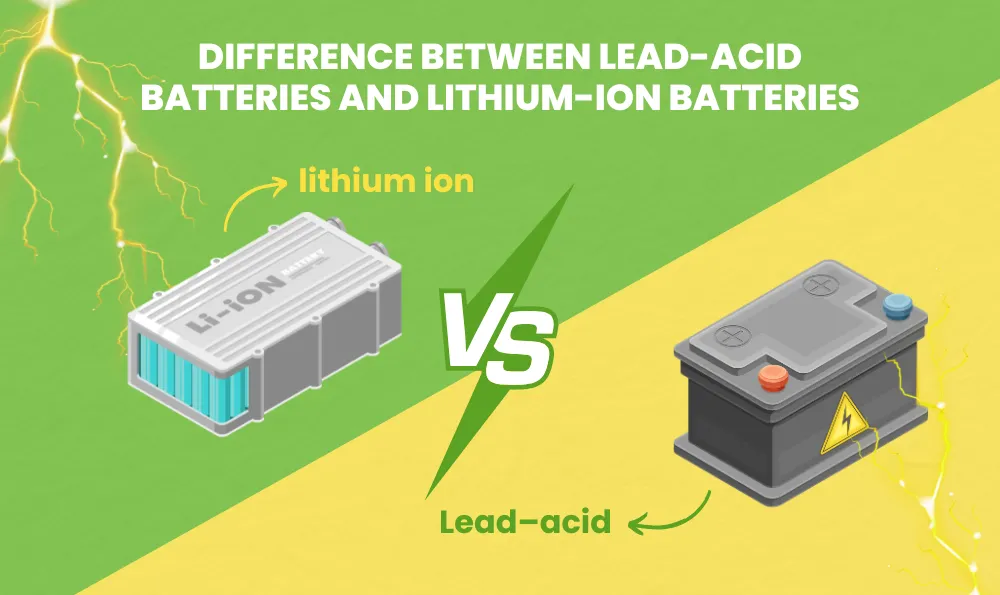
Energy storage has become increasingly crucial in the modern world, driven by the need for reliable, efficient, and sustainable power solutions. From residential solar power systems to industrial backup systems, energy storage technologies play a pivotal role in ensuring continuous power availability. Among the most commonly used energy storage solutions are Lead-Acid batteries and Lithium-Ion batteries. Each has its own advantages and limitations, making the choice between them highly dependent on the application.
In this article, we’ll compare Lead-Acid batteries and Lithium-Ion batteries in terms of cost, performance, lifetime, safety, and environmental impact, helping you understand which is the better option for your energy storage needs.
Lead-Acid Batteries:
Lead-acid batteries are the more affordable option when it comes to initial purchase price. Typically, they are the go-to choice for budget-conscious applications, especially for backup power systems and off-grid solar installations. The lower upfront cost makes lead-acid batteries an attractive option for many users, but it’s important to consider their lifetime and maintenance costs when evaluating the overall investment.
Lithium-Ion Batteries:
Lithium-ion batteries, on the other hand, come with a higher initial price tag. However, the longer lifespan, greater efficiency, and higher energy density often mean they offer better value in the long term. Cost per cycle—the cost of power per charge cycle—tends to be lower for lithium-ion batteries due to their superior cycle life.
Conclusion:

Lead-Acid Batteries:
Lead-acid batteries have a lower energy density than lithium-ion batteries, meaning they need to be larger and heavier to store the same amount of energy. This can limit their use in applications where space and weight are critical. Additionally, lead-acid batteries are typically less efficient in charge/discharge cycles, often losing more energy as heat.
The efficiency of lead-acid batteries usually falls around 70-80% for round-trip energy storage (the difference between the energy input during charging and the energy output during discharging).
Lithium-Ion Batteries:
Lithium-ion batteries offer higher energy density, meaning they can store more energy in a smaller, lighter package. This is particularly advantageous in applications where space constraints are a concern, such as residential solar storage or electric vehicles. The round-trip efficiency of lithium-ion batteries is typically much higher, around 90-95%, meaning less energy is lost during the charging and discharging process.
Lithium-ion batteries also maintain a stable voltage output over the majority of their charge cycle, which results in consistent performance.
Conclusion:
Lead-Acid Batteries:
The average lifespan of a lead-acid battery typically ranges between 3 to 5 years, depending on usage, environmental factors, and maintenance. These batteries also undergo capacity degradation faster, especially if frequently discharged to low levels or exposed to high temperatures.
Maintenance is also required to maintain optimum performance in flooded lead-acid batteries, such as periodic water refills and regular cleaning to avoid terminal corrosion. In general, lead-acid batteries can withstand 300 to 500 charge cycles before significant degradation in capacity occurs.
Lithium-Ion Batteries:
Lithium-ion batteries, by contrast, have a much longer cycle life, typically ranging from 2,000 to 5,000 cycles, depending on the type and usage conditions. This allows lithium-ion batteries to last 10+ years in many applications before they need to be replaced. In addition, lithium-ion batteries require minimal maintenance and do not suffer from the same issues as lead-acid batteries, such as corrosion or water loss.
Conclusion:
Lead-Acid Batteries:
Lead-acid batteries are generally safe when properly maintained, but they do come with certain risks. Spillage of sulfuric acid from a damaged or poorly maintained battery can be dangerous. Flooded lead-acid batteries also produce hydrogen gas, which can create an explosion risk if not properly ventilated.
Additionally, corrosion around the terminals is a common issue, which can compromise battery performance and safety.
Lithium-Ion Batteries:
Lithium-ion batteries, while generally considered safe, have been known to pose risks such as thermal runaway, where the battery overheats and potentially catches fire or explodes. This risk is greatly minimized in modern lithium-ion batteries, thanks to improved designs and battery management systems (BMS) that prevent overcharging, overheating, and short-circuiting.
While lithium-ion batteries are relatively safe, their high energy density and flammability make them more dangerous in the event of physical damage or poor maintenance, requiring careful handling and installation.
Conclusion:
Lithium-Ion: Risk of thermal runaway, but this is mitigated by modern safety features.

Lead-Acid Batteries:
Lead-acid batteries are one of the most recycled battery types in the world, with 96% of the materials being reused, including lead and sulfuric acid. However, the process of mining and refining lead, along with the disposal of spent batteries, can have significant environmental consequences. Improper disposal can result in soil contamination and water pollution.
Lithium-Ion Batteries:
Lithium-ion batteries, while more energy-dense and efficient, can also pose environmental challenges when it comes to raw material extraction, particularly the mining of lithium, cobalt, and nickel. The process of mining and refining these metals has significant environmental and social impacts, including land degradation, water pollution, and human rights concerns.
Recycling of lithium-ion batteries is still evolving, with only a small percentage being effectively recycled. However, as technology progresses, new methods for lithium-ion recycling are being developed that could mitigate environmental concerns.
Conclusion:
Lead-Acid Batteries:
Lithium-Ion Batteries:
Both lead-acid batteries and lithium-ion batteries offer distinct advantages depending on the use case.
Ultimately, the choice between Lead-Acid and Lithium-Ion batteries comes down to application, budget, and performance requirements.
Spaceflight Power was founded in 1994 and named Zhongshan Spaceflight Power supply Co,. Ltd. In 2006, the company’s production base moved to Jiangxi Province for a larger production space with 120,000 square meters.
---- Read more Read more >>Copyright © 2026 - Spaceflight Power Supply Co., Ltd. ALL RIGHTS RESERVED Shipping PolicyReturn PolicyPrivacy Policy