The Essential Guide to Marine Lead-Acid Batteries: Durability & Corrosion Resistance
AUG.07,2025Lead-Acid Batteries for Golf Carts: Key Benefits & Trends
AUG.06,2025Energy Storage Solutions: Lead-Aide Batteries vs. Lithium-Ion
JUL.28,2025Understanding AGM Lead-Acid Batteries for Backup Power
JUL.28,2025Flooded Lead-Acid Batteries for Renewable Energy Storage
JUL.28,2025Gel Lead-Acid Batteries: A Long-Lasting Solution for Off-Grid Power
JUL.23,2025The Role of Lead-Acid Batteries in Electric Golf Carts
JUL.21,2025Telecom Power Systems: The Role of Lead-Acid Batteries
JUL.15,2025Lead-Acid Batteries in Power Tools: Dependability and Performance
JUL.15,2025Choosing Lead-Acid Batteries for Medical Equipment Backup
JUL.15,2025 Spaceflight Power Supply Co., Ltd.
Tel: +86-760-22555873
Fax: +86-760-22555873
E-mail: [email protected]
Add: 2108, Haigang City Office Building, No.1 Shengping East Road, Xiaolan Town, Zhongshan City, Guangdong Province
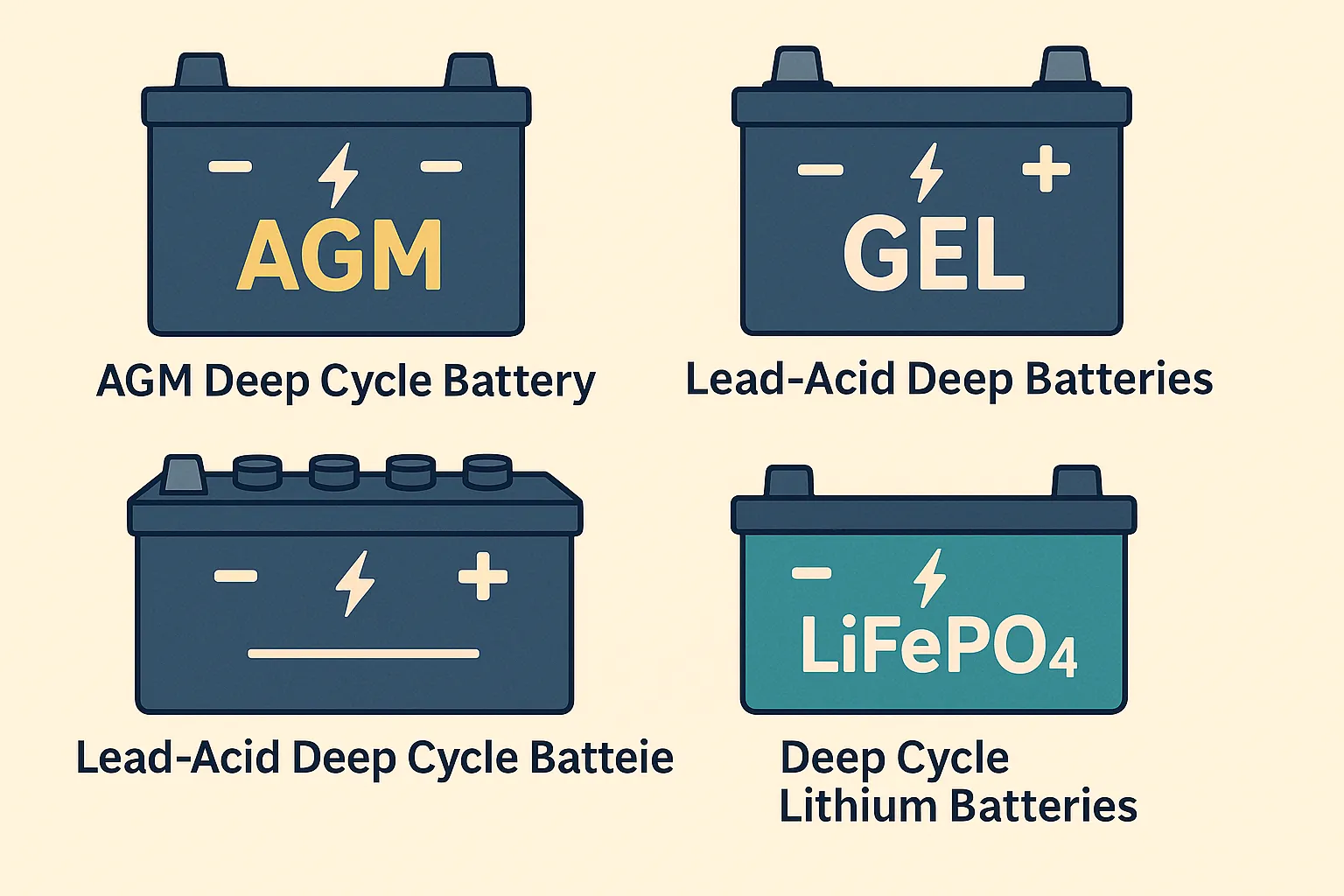
Electric vehicles (EVs) are revolutionizing the transportation industry, offering a sustainable alternative to traditional internal combustion engine vehicles. As the demand for EVs continues to rise, the technology powering these vehicles plays a crucial role in their performance, longevity, and cost-effectiveness. Among the different types of batteries available, deep cycle lead-acid batteries have gained popularity as an affordable and reliable option for powering electric vehicles, particularly in low-cost EVs, low-speed vehicles, and off-grid applications.
In this article, we explore the benefits, challenges, and applications of deep cycle lead-acid batteries in electric vehicles, and how they compare to other battery technologies like lithium-ion.

Deep cycle lead-acid batteries are a type of lead-acid battery designed to provide a steady amount of power over an extended period of time. Unlike traditional starter batteries, which are designed for short bursts of high energy (e.g., cranking an engine), deep cycle batteries are engineered to be discharged deeply and recharged repeatedly without damaging the internal components. This makes them ideal for applications that require continuous power over a longer duration, such as in electric vehicles.
Deep cycle lead-acid batteries typically consist of lead plates submerged in an electrolyte solution of sulfuric acid and water. Over time, the plates form a lead-sulfate reaction, and when the battery is discharged and recharged, the sulfate is reversed, releasing energy and allowing the battery to be used again.
One of the main reasons why deep cycle lead-acid batteries are still widely used in electric vehicles, especially budget-friendly models, is their affordability. Compared to lithium-ion batteries, deep cycle lead-acid batteries are significantly less expensive, making them an attractive option for consumers looking for low-cost EVs or entry-level electric vehicles. This lower upfront cost can make EVs more accessible to a wider range of consumers.
Lead-acid battery technology has been around for over a century, and deep cycle versions have been used reliably in off-grid solar systems, electric boats, and other long-duration power applications. This long track record gives consumers confidence in the reliability of lead-acid batteries for powering electric vehicles. The widespread availability of lead-acid batteries also means that they are easier to find and replace compared to newer, more specialized technologies.
Deep cycle lead-acid batteries are well-suited to operate in a wide range of environments and temperatures. Whether it’s a hot, sunny day or a cold winter night, deep cycle lead-acid batteries maintain stable performance in both extreme heat and low temperatures. This makes them an attractive option for electric vehicles in regions where temperatures fluctuate significantly throughout the year.
For low-speed electric vehicles (LSEVs) or low-range EVs, deep cycle lead-acid batteries provide an effective solution. These types of EVs, such as electric scooters, golf carts, and neighborhood electric vehicles (NEVs), typically don’t require the long-range capabilities of higher-end EVs like those powered by lithium-ion batteries. Deep cycle lead-acid batteries offer a balanced mix of cost, reliability, and power capacity for short-distance travel.

Electric scooters and motorcycles often rely on deep cycle lead-acid batteries for their cost-effectiveness and reliable performance in city commuting and short-distance trips. Lead-acid batteries are an ideal choice for electric two-wheelers because of their affordable price point and ability to withstand the frequent charge and discharge cycles typical in daily commuting.
Golf carts are another popular application for deep cycle lead-acid batteries. These vehicles require a battery system that can handle frequent discharges over a moderate range of distances. Lead-acid batteries meet these needs well, providing reliable power for golf courses, residential communities, and off-road areas. They are an affordable option for both personal and commercial uses.
Neighborhood electric vehicles (NEVs) are small electric cars designed for use in residential communities and urban areas where low-speed travel is common. These vehicles typically have a limited range (around 30 to 40 miles) and operate at low speeds (typically under 25 mph). Deep cycle lead-acid batteries provide sufficient power for these vehicles at a lower cost compared to lithium-ion alternatives.
In areas without access to a reliable power grid, deep cycle lead-acid batteries can be used to power electric vehicles that serve remote locations. Whether it’s an electric utility vehicle, an agricultural vehicle, or a remote community transport vehicle, deep cycle lead-acid batteries can provide a reliable, affordable power source.
One of the major drawbacks of deep cycle lead-acid batteries in electric vehicles is their shorter cycle life compared to other battery types, particularly lithium-ion batteries. While lithium-ion batteries can last up to 1,000 to 3,000 charge cycles, deep cycle lead-acid batteries typically provide 300 to 500 charge cycles before experiencing a noticeable reduction in capacity. As a result, deep cycle lead-acid batteries need to be replaced more frequently, increasing long-term costs.
Deep cycle lead-acid batteries have a lower energy density compared to lithium-ion batteries, which means they require larger battery packs to store the same amount of energy. This results in heavier and bulkier battery systems, reducing the available space and increasing the overall weight of the vehicle. In contrast, lithium-ion batteries can store more energy in a smaller and lighter package, providing better overall efficiency and range for electric vehicles.
While deep cycle lead-acid batteries are often advertised as requiring minimal maintenance, they still need some level of care to ensure optimal performance. Regular maintenance includes checking electrolyte levels (in non-sealed batteries), cleaning terminals, and preventing sulfation (crystal buildup). Failing to perform routine maintenance can reduce the life and effectiveness of the battery.
For electric vehicles that require longer distances between charges, deep cycle lead-acid batteries are often not the best option. Lithium-ion batteries provide much higher energy densities, allowing for a longer range on a single charge. This makes deep cycle lead-acid batteries less ideal for high-performance electric vehicles, such as long-range sedans or high-speed electric cars.
Feature | Deep Cycle Lead-Acid Batteries | Lithium-Ion Batteries |
Cost | Low initial cost | Higher initial cost |
Cycle Life | 300–500 cycles | 1,000–3,000 cycles |
Energy Density | Low | High |
Weight | Heavy | Light |
Maintenance | Low maintenance, but requires some periodic care | Very low maintenance |
Temperature Tolerance | Fair tolerance to high and low temperatures | Poor tolerance to extreme temperatures |
Ideal Applications | Low-speed vehicles, golf carts, off-grid applications | High-performance EVs, long-range applications |
Deep cycle lead-acid batteries remain a popular and affordable choice for powering certain types of electric vehicles, particularly those designed for low-speed, short-range travel, or budget-conscious consumers. They offer a reliable power source for electric scooters, golf carts, and neighborhood electric vehicles, with the added benefits of proven technology and low initial cost.
However, for long-range or high-performance electric vehicles, alternative battery technologies like lithium-ion offer superior performance in terms of energy density, cycle life, and weight. Deep cycle lead-acid batteries are still a viable option for specific EV applications, but they may be phased out in favor of more advanced technologies as the electric vehicle market continues to evolve.
By considering the unique needs of the vehicle and the intended use, deep cycle lead-acid batteries can continue to play a significant role in the affordable and reliable electric vehicle market.
Spaceflight Power was founded in 1994 and named Zhongshan Spaceflight Power supply Co,. Ltd. In 2006, the company’s production base moved to Jiangxi Province for a larger production space with 120,000 square meters.
Learn About Spaceflight Power Learn About Spaceflight PowerCopyright © 2026 - Spaceflight Power Supply Co., Ltd. ALL RIGHTS RESERVED Shipping PolicyReturn PolicyPrivacy Policy