The Essential Guide to Marine Lead-Acid Batteries: Durability & Corrosion Resistance
AUG.07,2025Lead-Acid Batteries for Golf Carts: Key Benefits & Trends
AUG.06,2025Energy Storage Solutions: Lead-Aide Batteries vs. Lithium-Ion
JUL.28,2025Understanding AGM Lead-Acid Batteries for Backup Power
JUL.28,2025Flooded Lead-Acid Batteries for Renewable Energy Storage
JUL.28,2025Gel Lead-Acid Batteries: A Long-Lasting Solution for Off-Grid Power
JUL.23,2025The Role of Lead-Acid Batteries in Electric Golf Carts
JUL.21,2025Telecom Power Systems: The Role of Lead-Acid Batteries
JUL.15,2025Lead-Acid Batteries in Power Tools: Dependability and Performance
JUL.15,2025Choosing Lead-Acid Batteries for Medical Equipment Backup
JUL.15,2025 Spaceflight Power Supply Co., Ltd.
Tel: +86-760-22555873
Fax: +86-760-22555873
E-mail: [email protected]
Add: 2108, Haigang City Office Building, No.1 Shengping East Road, Xiaolan Town, Zhongshan City, Guangdong Province
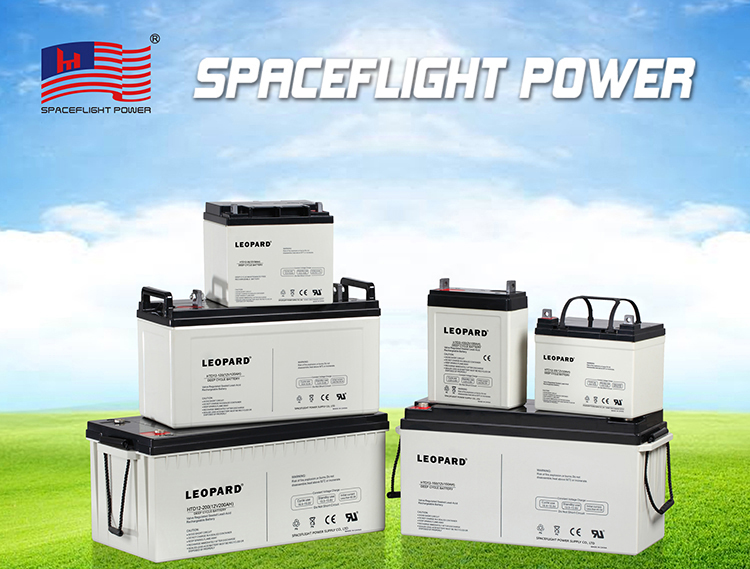
Deep cycle lead-acid batteries are a reliable and widely used energy storage solution, especially for applications requiring sustained energy delivery over long periods. Unlike standard lead-acid batteries, which are designed for short bursts of high energy (such as starting a car), deep cycle batteries are built to provide continuous power and endure multiple discharge and recharge cycles. This makes them ideal for powering renewable energy systems, off-grid applications, marine equipment, recreational vehicles (RVs), and more.
In this article, we explore the unique design, advantages, applications, and maintenance requirements of deep cycle lead-acid batteries, highlighting why they remain a popular choice in today’s energy storage landscape.

1.1. Design and Structure
Deep cycle lead-acid batteries are designed to deliver a steady, low current over an extended period. Unlike traditional starter batteries, which are optimized to deliver a quick burst of energy to start an engine, deep cycle batteries can be deeply discharged (up to 80%) without damaging the internal components.
These batteries consist of thicker lead plates compared to standard lead-acid batteries. The thicker plates help improve durability and longevity, allowing the battery to withstand deep discharge cycles without significant degradation. The electrolyte inside deep cycle batteries is typically a mixture of sulfuric acid and water, which helps to store and release energy during charging and discharging processes.
1.2. Types of Deep Cycle Lead-Acid Batteries
There are two main types of deep cycle lead-acid batteries:
2.1. Long Life Cycle
Deep cycle lead-acid batteries are designed to last through many charge and discharge cycles, typically ranging from 500 to over 1,000 cycles, depending on the battery’s quality and usage conditions. This makes them ideal for applications where daily energy discharge is common, such as solar power systems or electric vehicles like golf carts.
2.2. Cost-Effective Energy Storage
Compared to newer battery technologies like lithium-ion, deep cycle lead-acid batteries offer a more cost-effective solution for energy storage. While they may require more maintenance and have a lower energy density, their affordability makes them a viable option for large-scale storage systems where cost is a significant factor.
2.3. Reliable Performance in Various Conditions
Deep cycle lead-acid batteries are known for their reliable performance in various environmental conditions. Whether used in hot climates or cold regions, they can maintain stable energy output, making them suitable for both indoor and outdoor applications. They also perform well in off-grid setups, where consistent energy storage is critical.
3.1. Renewable Energy Systems
In renewable energy systems, such as solar or wind power installations, energy storage is crucial for ensuring a steady power supply even when the sun isn’t shining or the wind isn’t blowing. Deep cycle lead-acid batteries are frequently used to store excess energy generated by these systems, allowing homeowners or businesses to draw on stored power when needed.
These batteries offer a reliable, long-lasting solution for off-grid solar systems, making them an essential component of sustainable energy projects worldwide.
3.2. Recreational Vehicles (RVs)
RVs require a dependable power source for extended periods of travel, often far from traditional grid access. Deep cycle lead-acid batteries provide the sustained energy necessary to run lights, appliances, and electronics within the vehicle. Because they can handle deep discharges without losing capacity, they are perfect for this use, providing power for longer periods between charges.
3.3. Marine Applications
Boats and other marine vessels often rely on deep cycle lead-acid batteries to power equipment such as navigation systems, lights, and appliances. These batteries are particularly valued in marine applications for their ability to provide consistent power over long durations, especially in environments where grid power is unavailable.
Flooded and AGM deep cycle batteries are commonly used in marine environments, with sealed batteries being favored for their resistance to vibration and potential leakage in rough waters.
3.4. Golf Carts and Electric Vehicles
Many electric vehicles, including golf carts and utility vehicles, use deep cycle lead-acid batteries to provide the long-lasting power needed for continuous operation. These batteries are capable of delivering power over multiple hours of usage, making them a go-to solution for electric vehicles that require steady performance across extended periods.
3.5. Uninterruptible Power Supply (UPS) Systems
Deep cycle lead-acid batteries are also found in Uninterruptible Power Supply (UPS) systems, which provide backup power to critical devices during power outages. They ensure that essential systems, such as medical equipment or computer networks, remain operational when the primary power source is lost.

4.1. Regular Charging and Discharging
To maximize the life cycle of deep cycle lead-acid batteries, it is essential to maintain a regular charging and discharging schedule. Unlike other battery types, deep cycle batteries perform best when they are not left in a discharged state for extended periods. Regular charging ensures that the battery remains healthy and prolongs its lifespan.
4.2. Watering (For Flooded Batteries)
Flooded deep cycle batteries require periodic watering to maintain proper electrolyte levels. Checking the water levels and topping up with distilled water as needed ensures that the battery plates remain submerged, preventing damage and improving performance.
4.3. Avoiding Over-Discharge
While deep cycle batteries are designed to handle deep discharges, consistently draining the battery beyond 50% capacity can reduce its overall lifespan. Keeping an eye on battery levels and avoiding excessive discharge will help to preserve the battery’s longevity.
Deep cycle lead-acid batteries remain a cornerstone of energy storage, offering reliable and cost-effective solutions for a range of applications, from renewable energy systems to marine and recreational vehicles. Their ability to provide sustained power over long periods and endure multiple cycles makes them indispensable in off-grid and mobile applications.
Though newer battery technologies like lithium-ion are becoming more common, the tried-and-true performance of deep cycle lead-acid batteries continues to make them a competitive choice. With proper maintenance and care, these batteries can deliver years of dependable energy, making them a valuable investment in various sectors.
Spaceflight Power was founded in 1994 and named Zhongshan Spaceflight Power supply Co,. Ltd. In 2006, the company’s production base moved to Jiangxi Province for a larger production space with 120,000 square meters.
Learn About Spaceflight Power Learn About Spaceflight PowerCopyright © 2026 - Spaceflight Power Supply Co., Ltd. ALL RIGHTS RESERVED Shipping PolicyReturn PolicyPrivacy Policy