The Essential Guide to Marine Lead-Acid Batteries: Durability & Corrosion Resistance
AUG.07,2025Lead-Acid Batteries for Golf Carts: Key Benefits & Trends
AUG.06,2025Energy Storage Solutions: Lead-Aide Batteries vs. Lithium-Ion
JUL.28,2025Understanding AGM Lead-Acid Batteries for Backup Power
JUL.28,2025Flooded Lead-Acid Batteries for Renewable Energy Storage
JUL.28,2025Gel Lead-Acid Batteries: A Long-Lasting Solution for Off-Grid Power
JUL.23,2025The Role of Lead-Acid Batteries in Electric Golf Carts
JUL.21,2025Telecom Power Systems: The Role of Lead-Acid Batteries
JUL.15,2025Lead-Acid Batteries in Power Tools: Dependability and Performance
JUL.15,2025Choosing Lead-Acid Batteries for Medical Equipment Backup
JUL.15,2025 Spaceflight Power Supply Co., Ltd.
Tel: +86-760-22555873
Fax: +86-760-22555873
E-mail: [email protected]
Add: 2108, Haigang City Office Building, No.1 Shengping East Road, Xiaolan Town, Zhongshan City, Guangdong Province
Lead-acid batteries have been an essential power source for various industries and applications for over a century. They are widely used in automobiles, backup power systems, renewable energy storage, and more. However, like all batteries, their end-of-life disposal poses significant environmental challenges. Fortunately, lead-acid batteries are one of the most recycled products globally, thanks to well-established recycling practices. In this article, we will explore the environmental impact of lead-acid battery recycling, its benefits, and the efforts being made to improve the process.
Lead-acid batteries, when improperly disposed of, can cause severe environmental harm. They contain lead, a toxic metal that can contaminate soil, water, and air. Additionally, the sulfuric acid used in the battery is corrosive and can cause harm to the environment if it leaks. Therefore, recycling these batteries is not only necessary for resource recovery but also crucial for minimizing environmental risks. In fact, more than 95% of lead-acid batteries are recycled, making them one of the most successfully recycled products globally.
Lead is a hazardous substance that can cause significant health problems, including neurological damage, kidney disease, and developmental issues in children. Improper disposal of lead-acid batteries can lead to contamination of the surrounding environment, especially in areas where the waste is not managed responsibly. Recycling lead-acid batteries helps keep lead out of landfills and reduces the risk of environmental contamination.
The sulfuric acid in lead-acid batteries can be dangerous to both humans and the environment. If not disposed of properly, the acid can leak into soil and groundwater, potentially contaminating drinking water sources and harming plant and animal life. Proper recycling ensures that sulfuric acid is neutralized and safely handled.

Recycling lead-acid batteries involves a multi-step process that extracts valuable materials for reuse while minimizing environmental harm. Here’s how the process generally works:
Once a lead-acid battery reaches the end of its useful life, it must be collected and transported to a recycling facility. Many countries have regulations requiring the return of spent batteries to authorized collection points to prevent illegal disposal. Once collected, the batteries are transported to specialized recycling facilities.
The first step in the recycling process is the dismantling of the battery. The battery’s casing, usually made of plastic, is removed, and the battery is broken apart. The lead plates, which are the main components of the battery, are separated from the sulfuric acid.
The sulfuric acid is neutralized to create a harmless substance, typically water and sodium sulfate, which can be safely discarded or even used in manufacturing products like detergents and glass. This step is crucial for reducing the environmental impact of the recycling process.
The lead plates are then sent to a smelting furnace, where they are heated to high temperatures. This process separates pure lead from other materials such as impurities or plastic residues. The lead is then purified and refined into lead ingots, which can be reused in the production of new batteries or other lead-based products.
The plastic casing of the battery, typically made of polypropylene, is also recycled. After being cleaned and shredded, it can be used in the production of new battery casings or other plastic products. In some cases, the recycled plastic is used in manufacturing new battery components.

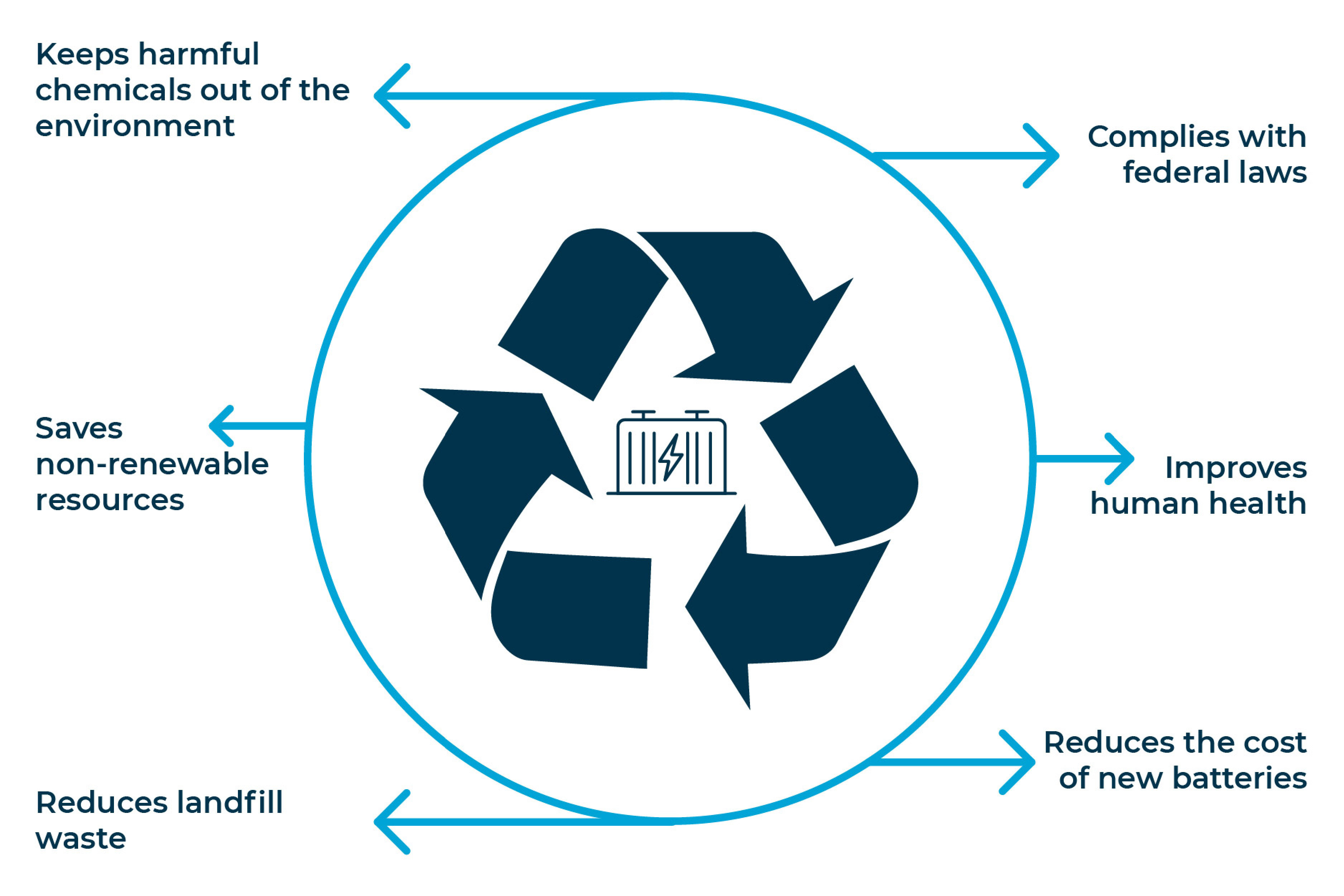
Recycling lead-acid batteries offers several environmental benefits that go beyond the recovery of valuable materials. These benefits help reduce pollution, conserve natural resources, and limit the energy use involved in manufacturing new products.
One of the most significant environmental benefits of recycling lead-acid batteries is the reduction in the need for lead mining. Mining lead ore can have devastating effects on the environment, including habitat destruction, water contamination, and the release of toxic substances. By recycling lead from old batteries, we reduce the need for new lead extraction, which helps preserve ecosystems and reduces environmental damage.
Lead and sulfuric acid are finite resources that require significant energy and raw materials to produce. Recycling these components conserves natural resources, ensuring a more sustainable supply chain for the production of new batteries. Additionally, the recycling process reduces the environmental footprint associated with the manufacturing of new batteries.
The recycling of lead-acid batteries requires far less energy than producing new batteries from raw materials. As a result, the carbon emissions associated with battery production are significantly reduced. Recycling not only helps reduce the demand for energy-intensive raw material extraction but also lowers greenhouse gas emissions, contributing to climate change mitigation.
Lead-acid batteries that are not recycled can end up in landfills, where they can leak toxic substances into the soil and groundwater. Recycling helps divert millions of batteries from landfills every year, reducing the overall amount of waste and minimizing the risk of contamination.
While lead-acid battery recycling is highly effective and beneficial, there are still challenges that need to be addressed to improve the process and make it more sustainable.
In some parts of the world, informal recycling practices still exist, where lead-acid batteries are dismantled and processed under unsafe conditions. This can lead to significant environmental pollution and health risks for workers. Regulating and enforcing proper recycling practices is essential to ensure that lead-acid battery recycling is done in an environmentally responsible way.
Lead-acid batteries are hazardous materials, and improper handling or transportation can result in leaks or accidents. To mitigate this, it is crucial to follow strict guidelines for collection, storage, and transportation of spent batteries. Safe handling protocols help prevent environmental contamination and protect public health.
Despite the high global recycling rates for lead-acid batteries, some regions still struggle with low recycling rates due to a lack of infrastructure, awareness, or enforcement of regulations. Increased public education and government policies can help address these gaps and encourage higher recycling rates.
Recycling lead-acid batteries plays a critical role in minimizing environmental damage and conserving natural resources. By recovering lead and sulfuric acid for reuse and reducing the need for mining and raw material extraction, the recycling process helps reduce pollution, conserve resources, and mitigate climate change. However, to maximize the environmental benefits of lead-acid battery recycling, it is essential to address challenges such as informal recycling practices and low recycling rates in some regions. Continued innovation and improvement in recycling technologies, along with stronger regulations, will ensure that lead-acid batteries remain a sustainable and environmentally friendly energy solution.
Spaceflight Power was founded in 1994 and named Zhongshan Spaceflight Power supply Co,. Ltd. In 2006, the company’s production base moved to Jiangxi Province for a larger production space with 120,000 square meters.
Learn About Spaceflight Power Learn About Spaceflight PowerCopyright © 2026 - Spaceflight Power Supply Co., Ltd. ALL RIGHTS RESERVED Shipping PolicyReturn PolicyPrivacy Policy