The Essential Guide to Marine Lead-Acid Batteries: Durability & Corrosion Resistance
AUG.07,2025Lead-Acid Batteries for Golf Carts: Key Benefits & Trends
AUG.06,2025Energy Storage Solutions: Lead-Aide Batteries vs. Lithium-Ion
JUL.28,2025Understanding AGM Lead-Acid Batteries for Backup Power
JUL.28,2025Flooded Lead-Acid Batteries for Renewable Energy Storage
JUL.28,2025Gel Lead-Acid Batteries: A Long-Lasting Solution for Off-Grid Power
JUL.23,2025The Role of Lead-Acid Batteries in Electric Golf Carts
JUL.21,2025Telecom Power Systems: The Role of Lead-Acid Batteries
JUL.15,2025Lead-Acid Batteries in Power Tools: Dependability and Performance
JUL.15,2025Choosing Lead-Acid Batteries for Medical Equipment Backup
JUL.15,2025 Spaceflight Power Supply Co., Ltd.
Tel: +86-760-22555873
Fax: +86-760-22555873
E-mail: [email protected]
Add: 2108, Haigang City Office Building, No.1 Shengping East Road, Xiaolan Town, Zhongshan City, Guangdong Province
In an increasingly connected world, the need for uninterrupted power supply (UPS) systems has become more crucial than ever. Whether for critical medical equipment, data centers, telecommunications, or emergency lighting, power interruptions can have significant consequences. Uninterruptible power supplies (UPS) are essential for ensuring that critical systems continue running during power outages, offering a temporary power source to maintain operations until the main power supply is restored.
Among the various types of batteries used in UPS systems, lead-acid batteries have remained a popular choice due to their affordability, reliability, and proven track record. Despite the growing adoption of newer battery technologies like lithium-ion, lead-acid batteries continue to offer essential advantages, particularly in high-demand, cost-sensitive applications.
This article will explore the role of lead-acid batteries in UPS systems, examining their strengths, applications, challenges, and why they are still highly valued for backup power solutions.

A UPS is an electrical device that provides emergency backup power to connected equipment when the main power source fails. UPS systems typically consist of:
UPS systems are classified based on their topology, including offline, line-interactive, and online UPS designs. These systems are essential for protecting against power disruptions such as sags, spikes, brownouts, and complete blackouts.
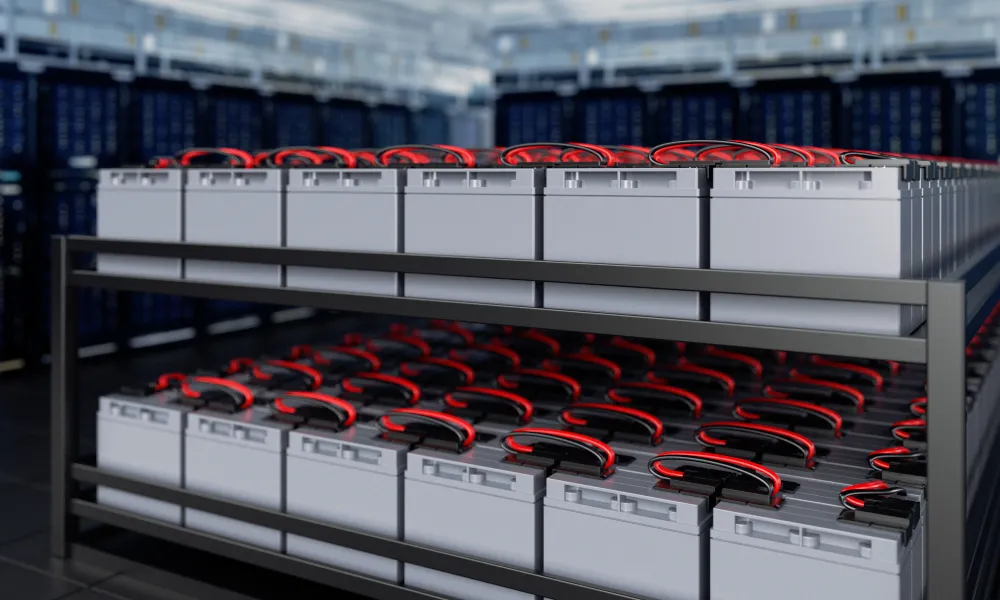
Lead-acid batteries, due to their well-established performance and cost-effectiveness, are commonly used as the power source in many UPS systems.
One of the most significant advantages of lead-acid batteries is their affordability. Compared to newer technologies like lithium-ion batteries, lead-acid batteries are typically much more budget-friendly, making them an ideal choice for large-scale deployments where cost is a primary concern. UPS systems, especially those used in commercial, industrial, and residential settings, can benefit from the lower upfront cost of lead-acid batteries.
Lead-acid batteries have been in use for over a century, making them a tried-and-tested technology. Their long history in powering various applications, including automobiles, telecom systems, and emergency lighting, has led to widespread confidence in their reliability. The familiarity with lead-acid technology, along with a well-developed support network and service infrastructure, makes these batteries a trusted choice for UPS applications.
Lead-acid batteries are known for their reliable performance in high-demand environments. Their deep-cycle capabilities allow them to handle extended discharges, making them suitable for UPS systems that may need to provide power for longer periods during an outage. In these systems, the lead-acid battery is expected to support a range of power needs without significant degradation in performance.
Lead-acid batteries are durable and capable of withstanding harsh environmental conditions. Their ability to perform in extreme temperatures, vibration, and shocks makes them particularly useful in industrial environments, where equipment and conditions may not always be ideal. Additionally, they have a wide operating temperature range, which is critical for outdoor or unregulated environments.

There are several types of lead-acid batteries that are used in UPS applications, each offering distinct advantages:
Flooded lead-acid batteries are the most traditional type. They require regular maintenance to ensure the electrolyte levels are correct. While maintenance can be an inconvenience, they are often the most cost-effective option for larger, industrial-sized UPS systems. They are robust and reliable, often used in environments where the battery system will be managed by trained personnel.
Sealed lead-acid batteries, which include AGM (Absorbent Glass Mat) and gel batteries, are designed to be maintenance-free. They are sealed to prevent the leakage of electrolytes, making them safer to use in environments where regular maintenance is not feasible. These batteries are often used in smaller to mid-sized UPS systems, where the convenience of minimal upkeep is a key consideration.
VRLA batteries combine the best features of flooded and sealed lead-acid batteries. They offer excellent performance with the convenience of being sealed, requiring little to no maintenance. These batteries are often used in critical UPS applications, providing a safe, reliable, and durable solution for backup power.
Lead-acid batteries are known for their proven reliability. While they do have a finite lifespan (typically ranging from 3 to 10 years, depending on the type), their long track record and simple design contribute to their sustained popularity in UPS systems. Proper maintenance and monitoring can extend the life of these batteries, ensuring they continue to perform when needed most.
For businesses, data centers, or industrial facilities with large UPS systems, lead-acid batteries offer the best cost-benefit ratio. They provide dependable backup power without the significant investment required for more advanced technologies like lithium-ion batteries.
Lead-acid batteries can endure deep discharge cycles, making them a practical option for UPS systems that need to handle extended outages. Their ability to operate under such conditions is vital for ensuring that critical equipment remains powered during emergency situations.
Lead-acid batteries are widely available around the world, making them a convenient option for both installation and replacement. They also benefit from extensive support networks and a broad understanding within the industry. This global availability ensures that UPS systems utilizing lead-acid batteries can be maintained efficiently.
While lead-acid batteries have many advantages, they also come with some inherent challenges:
Flooded lead-acid batteries require regular maintenance, including the monitoring of electrolyte levels and periodic cleaning to prevent corrosion. This maintenance can be labor-intensive and may be a challenge in certain environments.
Compared to newer technologies like lithium-ion, lead-acid batteries have a shorter cycle life. Frequent charging and discharging, particularly in high-demand UPS applications, can reduce their effectiveness over time. Regular maintenance and replacement are required to ensure continued performance.
Lead-acid batteries tend to be bulkier and heavier than other battery types. For UPS systems that need to fit in tight spaces or for applications requiring a compact solution, the size and weight of lead-acid batteries can be a limitation.
Lead-acid batteries contain lead, a toxic material that can pose environmental risks if not disposed of properly. While recycling programs exist, the proper disposal of lead-acid batteries remains a concern for sustainability.
Despite the growing popularity of lithium-ion and other advanced battery technologies, lead-acid batteries continue to be a mainstay in uninterruptible power supply (UPS) systems. Their reliability, cost-effectiveness, and long history make them an attractive option for a wide range of industries, from telecommunications to data centers and healthcare. Although challenges such as maintenance requirements and environmental concerns exist, the proven benefits of lead-acid batteries, especially in large-scale applications, ensure that they will remain an integral part of UPS systems for the foreseeable future.
For organizations looking for a tried-and-true solution that offers dependable backup power at a reasonable cost, lead-acid batteries will continue to play a central role in ensuring that critical systems remain operational during power outages.
Spaceflight Power was founded in 1994 and named Zhongshan Spaceflight Power supply Co,. Ltd. In 2006, the company’s production base moved to Jiangxi Province for a larger production space with 120,000 square meters.
---- Read more Read more >>Copyright © 2026 - Spaceflight Power Supply Co., Ltd. ALL RIGHTS RESERVED Shipping PolicyReturn PolicyPrivacy Policy