The Essential Guide to Marine Lead-Acid Batteries: Durability & Corrosion Resistance
AUG.07,2025Lead-Acid Batteries for Golf Carts: Key Benefits & Trends
AUG.06,2025Energy Storage Solutions: Lead-Aide Batteries vs. Lithium-Ion
JUL.28,2025Understanding AGM Lead-Acid Batteries for Backup Power
JUL.28,2025Flooded Lead-Acid Batteries for Renewable Energy Storage
JUL.28,2025Gel Lead-Acid Batteries: A Long-Lasting Solution for Off-Grid Power
JUL.23,2025The Role of Lead-Acid Batteries in Electric Golf Carts
JUL.21,2025Telecom Power Systems: The Role of Lead-Acid Batteries
JUL.15,2025Lead-Acid Batteries in Power Tools: Dependability and Performance
JUL.15,2025Choosing Lead-Acid Batteries for Medical Equipment Backup
JUL.15,2025 Spaceflight Power Supply Co., Ltd.
Tel: +86-760-22555873
Fax: +86-760-22555873
E-mail: [email protected]
Add: 2108, Haigang City Office Building, No.1 Shengping East Road, Xiaolan Town, Zhongshan City, Guangdong Province
Uninterruptible Power Supply (UPS) systems are essential for providing backup power during outages or fluctuations, ensuring that critical devices remain operational. From protecting servers in data centers to keeping life-saving medical equipment running, UPS systems are vital in various industries. One of the most common types of batteries used in these systems is the lead-acid battery, known for its reliability, cost-effectiveness, and long lifespan.
In this article, we will explore the role of lead-acid batteries in UPS systems, their advantages, the challenges they face, and why they continue to be a popular choice despite the rise of newer battery technologies.

Lead-acid batteries are one of the oldest types of rechargeable batteries, first invented in 1859. Despite the emergence of newer technologies like lithium-ion, they remain widely used in UPS systems. Several factors contribute to their continued prevalence in this field:
Lead-acid batteries are relatively inexpensive compared to newer technologies, making them a cost-effective solution for large-scale applications such as UPS systems. While their upfront costs are lower, they also offer a favorable cost-to-energy ratio over their lifespan, providing reliable power at a low cost.
Having been used for over a century in various power backup applications, lead-acid batteries have a proven track record of reliability. Their ability to provide consistent, stable power makes them a trusted choice for UPS systems, where reliability is crucial.
Lead-acid batteries are capable of delivering high currents for short periods, making them ideal for UPS systems that need to provide power immediately when an outage occurs. Their ability to discharge large amounts of energy quickly ensures that devices connected to the UPS system experience little to no downtime.
Lead-acid batteries are readily available and have a well-established supply chain. This availability makes them easy to source and replace, minimizing downtime in the event of battery failure. Additionally, the widespread infrastructure for recycling lead-acid batteries contributes to their environmental sustainability.
While newer battery technologies like lithium-ion offer certain advantages, lead-acid batteries continue to be the go-to choice for many UPS systems due to several key benefits:
Lead-acid batteries are known for their durability and long lifespan. With proper maintenance, they can last several years, providing reliable backup power over extended periods. Their robust construction makes them resistant to damage from overcharging or deep discharges, which can be a common issue in high-demand UPS applications.
Lead-acid batteries are highly scalable, allowing UPS systems to be customized according to the needs of the application. Whether it’s a small UPS system for home use or a large industrial setup for a data center, lead-acid batteries can be configured to meet varying power requirements, making them a flexible solution for diverse applications.
One of the advantages of lead-acid batteries is their low self-discharge rate, meaning they can retain their charge for longer periods when not in use. This characteristic is particularly important in UPS systems, where the battery may only be used occasionally but needs to be ready to provide power at a moment’s notice.
Lead-acid batteries have a wide operating temperature range, which makes them suitable for use in various environments, including those with extreme temperatures. This temperature tolerance ensures that the batteries can function effectively even in harsh conditions, making them ideal for UPS systems in both hot and cold climates.

There are several types of lead-acid batteries, each with its own advantages and specific uses in UPS systems:
Flooded lead-acid batteries are the most traditional type, consisting of liquid electrolyte solutions. They require regular maintenance, such as topping up with distilled water, and are typically used in large-scale industrial UPS systems. While they offer high energy capacity and long life, their maintenance requirements and the risk of spillage make them less suitable for smaller or indoor UPS systems.
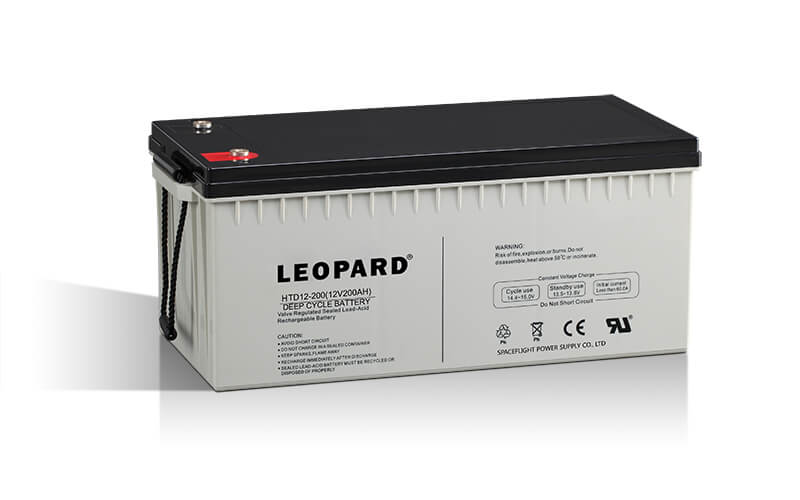
Sealed lead-acid batteries, also known as Valve-Regulated Lead-Acid (VRLA) batteries, are maintenance-free and leak-proof. They are commonly used in smaller UPS systems, such as those found in offices and homes, where ease of use and safety are key considerations. The two main types of SLA batteries are:
Despite their many advantages, lead-acid batteries are not without their challenges. Some of the key issues associated with using lead-acid batteries in UPS systems include:
Lead-acid batteries are heavier and bulkier compared to newer battery technologies like lithium-ion. This makes them less suitable for applications where space and weight are a concern. In large-scale UPS systems, the space required to house lead-acid batteries can be significant, potentially limiting their use in compact environments.
While lead-acid batteries are durable, they have a limited number of charge-discharge cycles compared to lithium-ion batteries. This means that lead-acid batteries may need to be replaced more frequently in applications where the UPS system is frequently used. Over time, this can increase maintenance and replacement costs.
Lead-acid batteries contain lead, which is toxic to the environment if not disposed of properly. Although lead-acid batteries are highly recyclable, improper disposal can lead to environmental contamination. As environmental regulations become stricter, the need for proper recycling and disposal practices becomes increasingly important.
As technology advances, lead-acid batteries are being improved to address some of their shortcomings. For example, advancements in battery design have led to the development of more compact, high-performance versions of lead-acid batteries, such as AGM and gel batteries. Additionally, the recycling processes for lead-acid batteries continue to improve, making them more environmentally friendly.
However, with the rise of lithium-ion batteries and other emerging technologies, the future of lead-acid batteries in UPS systems may see a shift. Lithium-ion batteries offer higher energy density, longer cycle life, and reduced weight, making them a competitive alternative for UPS systems, especially in smaller or more space-constrained environments.
Lead-acid batteries have long been the backbone of UPS systems, providing reliable, cost-effective backup power in a variety of settings. While they face competition from newer technologies, their proven track record, durability, and scalability ensure that they will remain a key component of UPS systems for the foreseeable future. As battery technology continues to evolve, lead-acid batteries will likely adapt to meet the growing demands of modern UPS applications, continuing to play a vital role in ensuring uninterrupted power.
Spaceflight Power was founded in 1994 and named Zhongshan Spaceflight Power supply Co,. Ltd. In 2006, the company’s production base moved to Jiangxi Province for a larger production space with 120,000 square meters.
Learn About Spaceflight Power Learn About Spaceflight PowerCopyright © 2026 - Spaceflight Power Supply Co., Ltd. ALL RIGHTS RESERVED Shipping PolicyReturn PolicyPrivacy Policy