The Essential Guide to Marine Lead-Acid Batteries: Durability & Corrosion Resistance
AUG.07,2025Lead-Acid Batteries for Golf Carts: Key Benefits & Trends
AUG.06,2025Energy Storage Solutions: Lead-Aide Batteries vs. Lithium-Ion
JUL.28,2025Understanding AGM Lead-Acid Batteries for Backup Power
JUL.28,2025Flooded Lead-Acid Batteries for Renewable Energy Storage
JUL.28,2025Gel Lead-Acid Batteries: A Long-Lasting Solution for Off-Grid Power
JUL.23,2025The Role of Lead-Acid Batteries in Electric Golf Carts
JUL.21,2025Telecom Power Systems: The Role of Lead-Acid Batteries
JUL.15,2025Lead-Acid Batteries in Power Tools: Dependability and Performance
JUL.15,2025Choosing Lead-Acid Batteries for Medical Equipment Backup
JUL.15,2025 Spaceflight Power Supply Co., Ltd.
Tel: +86-760-22555873
Fax: +86-760-22555873
E-mail: [email protected]
Add: 2108, Haigang City Office Building, No.1 Shengping East Road, Xiaolan Town, Zhongshan City, Guangdong Province
Lead-acid batteries, despite being one of the oldest forms of rechargeable energy storage, are widely used in a variety of applications, ranging from automotive systems to renewable energy storage. One of the critical challenges faced by lead-acid batteries is their performance in cold weather conditions. As temperatures drop, the efficiency and overall performance of lead-acid batteries decline, making them less reliable in environments that experience harsh winters. In this article, we will explore the science behind lead-acid battery behavior in cold weather, the challenges they face, and strategies to optimize their performance.

Lead-acid batteries function by converting chemical energy into electrical energy through an electrochemical reaction. This process involves the movement of ions between the battery’s lead plates and the electrolyte, typically a mixture of sulfuric acid and water. The speed and efficiency of these reactions are influenced by temperature.
In cold weather, the electrolyte becomes denser, slowing down the chemical reactions within the battery. The ions move more slowly, which reduces the battery’s ability to deliver power. This results in several key effects:
Lead-acid batteries are used in a wide range of applications, and cold weather can have a significant impact on their performance in the following areas:
2.1. Automotive Batteries
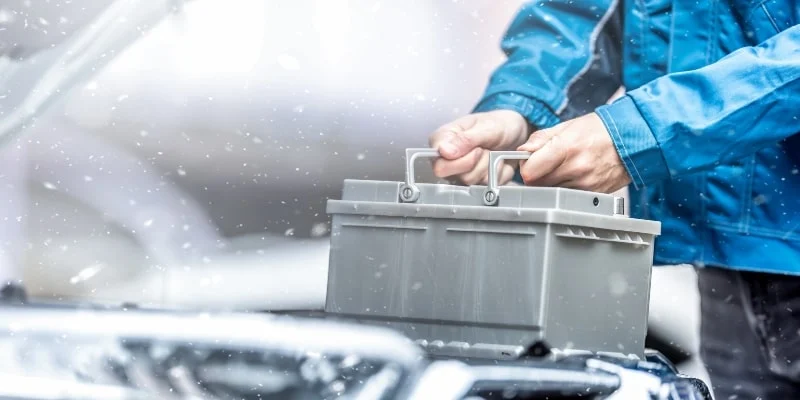
One of the most well-known uses of lead-acid batteries is in automotive starter batteries. Cold weather can severely impact a vehicle’s ability to start, as the battery’s capacity is diminished, and the engine requires more power to turn over in low temperatures. This is why cars can be difficult to start in freezing weather.
2.2. Off-Grid Renewable Energy Systems
Lead-acid batteries are commonly used in off-grid solar and wind energy systems for energy storage. In cold climates, these batteries must store power generated during the day to be used during the night. However, their reduced capacity in cold weather can limit the system’s ability to provide power through the night or on overcast days.
2.3. Backup Power Systems
Backup power systems for homes, businesses, or critical infrastructure (like hospitals) often rely on lead-acid batteries to provide uninterrupted power during outages. Cold weather can reduce the reliability of these backup systems, especially if the batteries are stored in unheated locations.

While lead-acid batteries are less efficient in cold temperatures, there are several strategies that can help improve their performance and reliability in such conditions.
3.1. Proper Battery Sizing
One way to mitigate the impact of cold weather is to properly size the battery bank. In cold climates, it is important to oversize the battery bank to account for the loss of capacity that occurs at low temperatures. By having extra capacity, the system can still meet energy needs even when the temperature drops.
3.2. Thermal Management
Maintaining an optimal operating temperature is one of the most effective ways to enhance the cold weather performance of lead-acid batteries. This can be achieved through several methods:
3.3. Regular Maintenance
Lead-acid batteries, particularly flooded types, require regular maintenance to ensure optimal performance. This becomes even more important in cold weather:
3.4. Cold-Crank Amps (CCA) Ratings
For automotive applications, choosing a lead-acid battery with a high Cold-Crank Amps (CCA) rating is essential for cold weather performance. The CCA rating indicates the battery’s ability to start an engine in cold conditions. Batteries with higher CCA ratings are designed to deliver more power in freezing temperatures, making them better suited for vehicles in colder climates.
Despite the strategies mentioned above, lead-acid batteries still face several limitations in cold weather:
4.1. Freezing of the Electrolyte
In extremely cold conditions, the electrolyte in a lead-acid battery can freeze, especially if the battery is in a discharged state. A fully charged lead-acid battery can withstand much colder temperatures without freezing, but a partially discharged battery is more vulnerable. If the electrolyte freezes, it can cause the battery to crack or become permanently damaged.
4.2. Decreased Lifespan
Repeated exposure to cold weather can reduce the overall lifespan of a lead-acid battery. The stress of fluctuating temperatures, combined with the effects of sulfation and reduced efficiency, can cause premature failure of the battery. This can lead to more frequent replacements and higher maintenance costs in cold climates.
4.3. Competition from Other Technologies
Lithium-ion batteries are becoming increasingly popular for cold weather applications due to their higher energy density, better low-temperature performance, and longer lifespan compared to lead-acid batteries. While they are more expensive upfront, lithium-ion batteries are often preferred in environments where cold weather performance is critical.
Although lead-acid batteries face significant challenges in cold weather, ongoing innovations in battery technology aim to address these issues. Some of the latest advancements include:
Additionally, hybrid systems that combine lead-acid and lithium-ion batteries are being developed to leverage the strengths of both technologies, allowing for more efficient energy storage and usage in cold climates.
Cold weather can significantly impact the performance of lead-acid batteries, reducing their capacity, charging efficiency, and overall reliability. However, with proper sizing, thermal management, and regular maintenance, their performance in cold conditions can be optimized. While alternative battery technologies like lithium-ion are gaining ground, lead-acid batteries remain a reliable and cost-effective solution for many cold weather applications, especially when paired with the right management strategies.
Spaceflight Power was founded in 1994 and named Zhongshan Spaceflight Power supply Co,. Ltd. In 2006, the company’s production base moved to Jiangxi Province for a larger production space with 120,000 square meters.
---- Read more Read more >>Copyright © 2026 - Spaceflight Power Supply Co., Ltd. ALL RIGHTS RESERVED Shipping PolicyReturn PolicyPrivacy Policy