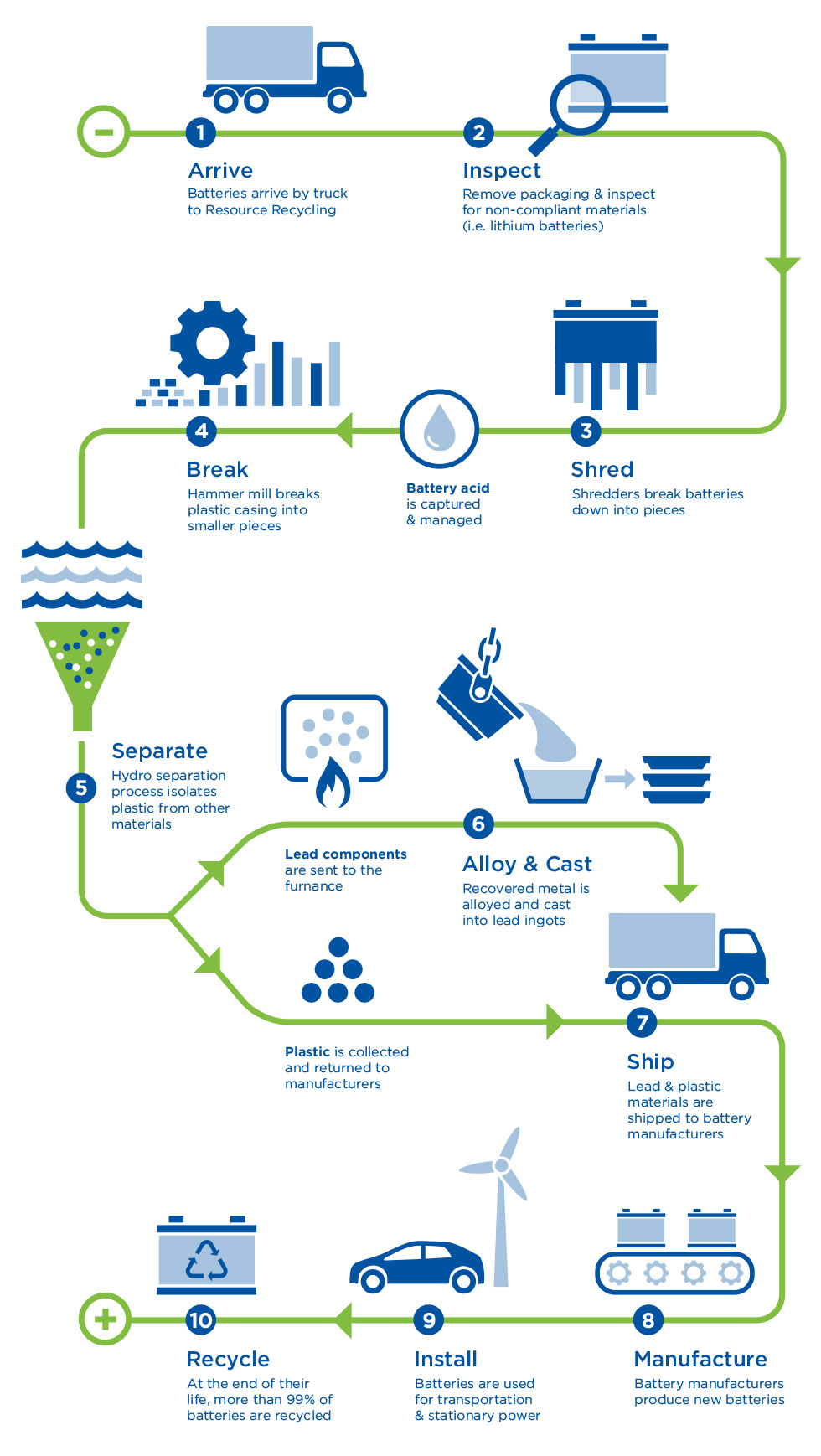
Recycling lead-acid batteries involves several steps, each designed to maximize resource recovery and minimize environmental impact:
- Collection and Transportation
The first step in recycling is the collection of used batteries. Various stakeholders, including retailers, automotive service centers, and waste management companies, play a role in gathering spent batteries. Ensuring safe transportation is crucial to prevent leaks and spills during transit.
- Sorting and Inspection
Once collected, batteries are sorted based on type and condition. This step is essential for efficient processing, as different types of lead-acid batteries may require specific handling techniques.
- Dismantling
Batteries are then dismantled to separate their components. This involves removing the plastic casing and separating the lead plates from the electrolyte. Careful dismantling minimizes waste and ensures that materials are appropriately handled.
- Processing
The lead plates are smelted in a furnace at high temperatures to remove impurities, resulting in pure lead that can be reused. The sulfuric acid is neutralized and converted into sodium sulfate, which can be used in detergents and glass manufacturing. The plastic casing is often recycled into new battery casings or other products.