The Essential Guide to Marine Lead-Acid Batteries: Durability & Corrosion Resistance
AUG.07,2025Lead-Acid Batteries for Golf Carts: Key Benefits & Trends
AUG.06,2025Energy Storage Solutions: Lead-Aide Batteries vs. Lithium-Ion
JUL.28,2025Understanding AGM Lead-Acid Batteries for Backup Power
JUL.28,2025Flooded Lead-Acid Batteries for Renewable Energy Storage
JUL.28,2025Gel Lead-Acid Batteries: A Long-Lasting Solution for Off-Grid Power
JUL.23,2025The Role of Lead-Acid Batteries in Electric Golf Carts
JUL.21,2025Telecom Power Systems: The Role of Lead-Acid Batteries
JUL.15,2025Lead-Acid Batteries in Power Tools: Dependability and Performance
JUL.15,2025Choosing Lead-Acid Batteries for Medical Equipment Backup
JUL.15,2025 Spaceflight Power Supply Co., Ltd.
Tel: +86-760-22555873
Fax: +86-760-22555873
E-mail: [email protected]
Add: 2108, Haigang City Office Building, No.1 Shengping East Road, Xiaolan Town, Zhongshan City, Guangdong Province
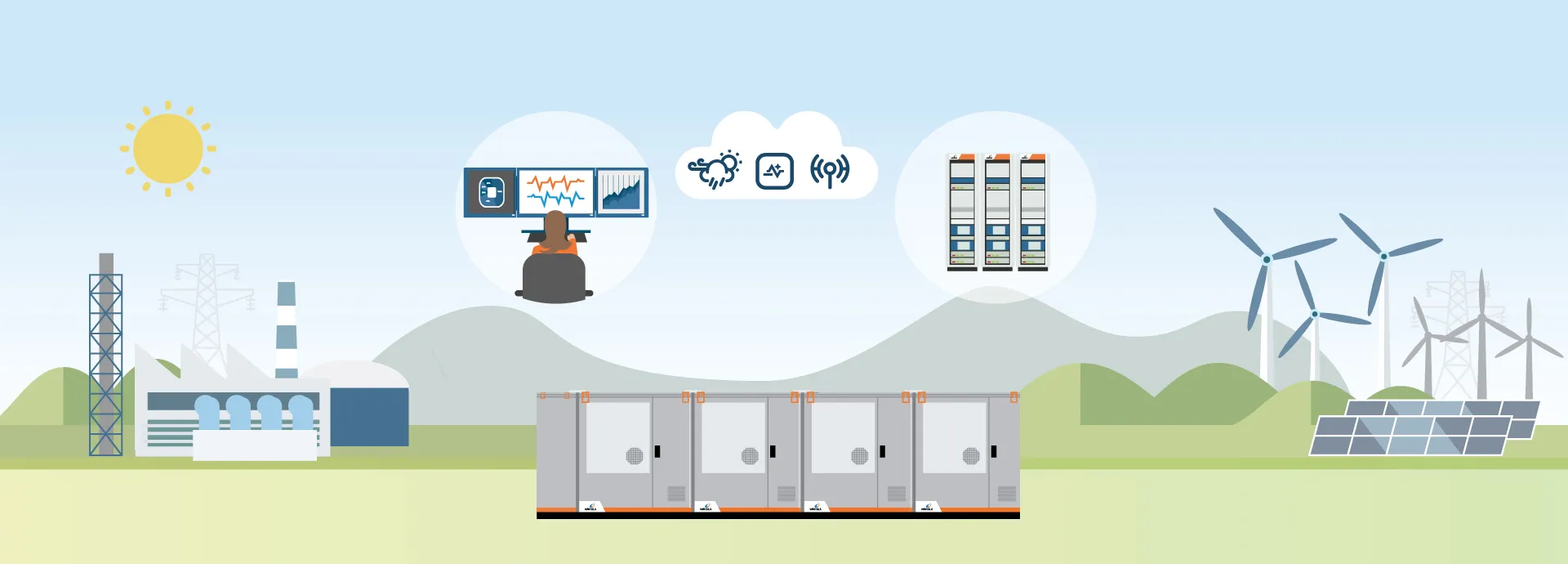
In the transition to a cleaner, more sustainable energy future, grid-scale energy storage is becoming increasingly important. As renewable energy sources like solar and wind power grow in prominence, the ability to store excess energy and release it when needed is crucial for ensuring grid stability and reliability. Among the various technologies being explored for large-scale energy storage, lead-acid batteries have remained a key contender due to their well-established use in energy systems, lower upfront costs, and reliable performance in specific applications.
This article delves into the role of lead-acid batteries in grid-scale energy storage, exploring their advantages, current applications, and the challenges they face in competing with more advanced technologies like lithium-ion batteries.
Grid-scale energy storage refers to large-capacity storage systems designed to store electricity on a utility or grid level. These systems can help balance supply and demand by storing excess energy generated during periods of high renewable energy production and releasing it during times of low energy generation or high demand. Effective energy storage is essential to overcome the intermittent nature of renewable energy sources, allowing for a more stable and resilient grid.
The main types of grid-scale storage include pumped hydro storage, compressed air energy storage, and battery energy storage systems (BESS). Among these, batteries are particularly attractive due to their flexibility, efficiency, and ability to be deployed in a variety of locations. Lead-acid batteries have long been used for backup power applications, and their low-cost, high-reliability characteristics make them a viable option for some grid-scale energy storage applications.

Lead-acid batteries, which have been in use for over a century, are among the most established energy storage technologies in the world. While they have largely been displaced by newer battery technologies, such as lithium-ion for many applications, lead-acid batteries still hold a prominent place in energy storage for grid-scale applications for several reasons.
Lead-acid batteries are currently being deployed in several grid-scale energy storage applications, with a focus on areas where cost, reliability, and long-term use are paramount. Some common applications include:
While lead-acid batteries offer many advantages for grid-scale storage, they also face several challenges that limit their widespread adoption in comparison to other energy storage technologies, such as lithium-ion.
Lead-acid batteries remain a relevant and cost-effective solution for grid-scale energy storage, particularly in applications where budget constraints, durability, and reliability are primary considerations. Their ability to provide backup power, integrate renewable energy, and help with peak shaving and grid stabilization ensures that they will continue to play a role in the energy landscape for the foreseeable future.
However, as the demand for more efficient, longer-lasting, and environmentally friendly energy storage solutions increases, newer technologies such as lithium-ion batteries and flow batteries are likely to take a larger share of the grid-scale energy storage market. The challenge for lead-acid batteries will be to compete with these more advanced technologies, particularly in applications where high energy density, long cycle life, and efficiency are essential.
Despite these challenges, lead-acid batteries will likely continue to serve as a reliable and affordable option for many grid storage applications, especially in regions and sectors where cost is a critical factor and the storage requirements are less demanding. With ongoing research and innovation, lead-acid batteries may see improvements in efficiency, cycle life, and environmental impact, allowing them to remain a viable part of the global energy storage solution.

Spaceflight Power was founded in 1994 and named Zhongshan Spaceflight Power supply Co,. Ltd. In 2006, the company’s production base moved to Jiangxi Province for a larger production space with 120,000 square meters.
Learn About Spaceflight Power Learn About Spaceflight PowerCopyright © 2026 - Spaceflight Power Supply Co., Ltd. ALL RIGHTS RESERVED Shipping PolicyReturn PolicyPrivacy Policy