The Essential Guide to Marine Lead-Acid Batteries: Durability & Corrosion Resistance
AUG.07,2025Lead-Acid Batteries for Golf Carts: Key Benefits & Trends
AUG.06,2025Energy Storage Solutions: Lead-Aide Batteries vs. Lithium-Ion
JUL.28,2025Understanding AGM Lead-Acid Batteries for Backup Power
JUL.28,2025Flooded Lead-Acid Batteries for Renewable Energy Storage
JUL.28,2025Gel Lead-Acid Batteries: A Long-Lasting Solution for Off-Grid Power
JUL.23,2025The Role of Lead-Acid Batteries in Electric Golf Carts
JUL.21,2025Telecom Power Systems: The Role of Lead-Acid Batteries
JUL.15,2025Lead-Acid Batteries in Power Tools: Dependability and Performance
JUL.15,2025Choosing Lead-Acid Batteries for Medical Equipment Backup
JUL.15,2025 Spaceflight Power Supply Co., Ltd.
Tel: +86-760-22555873
Fax: +86-760-22555873
E-mail: [email protected]
Add: 2108, Haigang City Office Building, No.1 Shengping East Road, Xiaolan Town, Zhongshan City, Guangdong Province
In an increasingly connected and power-dependent world, maintaining reliable electrical systems is paramount, especially for critical infrastructure. Hospitals, communication networks, data centers, emergency services, and utilities require constant power to operate efficiently, even during power outages or disruptions. To safeguard these essential services, backup power solutions are not just optional, they are a necessity. Among the various energy storage technologies available, lead-acid batteries remain one of the most popular and reliable choices for providing backup power in critical infrastructure applications.
In this article, we’ll explore why lead-acid batteries are commonly used in critical infrastructure backup systems, their advantages, limitations, and best practices for maximizing their performance.
Critical infrastructure includes systems and services that are vital to the functioning of society, such as:
These systems cannot afford any downtime because disruptions can lead to significant financial losses, health risks, or even life-threatening situations. A reliable backup power system ensures that essential services remain operational even in the event of power failures, providing the time necessary to switch to alternative power sources or restore regular grid power.
Backup power systems are usually designed with uninterruptible power supplies (UPS) and battery storage systems, with lead-acid batteries being one of the most widely adopted solutions for this purpose.

Lead-acid batteries have been used for backup power applications for many decades due to their proven track record of reliability, performance, and cost-effectiveness. Here are several reasons why they are often the go-to choice for critical infrastructure:
Lead-acid batteries have a long history of reliable performance in backup power applications. Whether used in hospitals, data centers, or telecommunications, they are known for their consistent ability to provide dependable backup power when needed the most. This proven track record makes them a trusted choice for critical infrastructure systems that require constant and stable power.
When compared to newer technologies like lithium-ion batteries, lead-acid batteries are significantly more affordable. For many organizations, especially those managing large infrastructure systems, the lower upfront cost of lead-acid batteries makes them an appealing choice. Additionally, lead-acid batteries are generally easier to replace and maintain, which further reduces their lifetime costs.
Lead-acid batteries are well-suited for backup power applications because they can provide a high discharge current. In critical infrastructure systems, such as hospitals and telecom towers, power requirements can surge unexpectedly, and lead-acid batteries are capable of delivering the high burst of energy needed to handle these loads. This makes them especially useful for powering equipment like emergency lighting, medical equipment, communication devices, and more during an outage.
Lead-acid battery technology is mature and well-understood, meaning that the components, repair services, and expertise are readily available in most regions. This level of familiarity ensures that critical infrastructure operators can rely on a wealth of knowledge for system design, maintenance, and troubleshooting, which is vital for minimizing downtime.
Lead-acid batteries are highly scalable and flexible, which makes them ideal for backup power in critical infrastructure systems of varying sizes. Whether you need a small battery backup for an individual server or a massive system capable of supporting an entire hospital or telecom network, lead-acid batteries can be configured to meet diverse power requirements. This scalability makes it easy to expand backup systems as the needs of critical infrastructure grow.

While all lead-acid batteries are based on the same fundamental chemistry, there are different types that may be better suited for various critical infrastructure applications. Understanding the differences between these types can help determine the best solution for your specific needs.
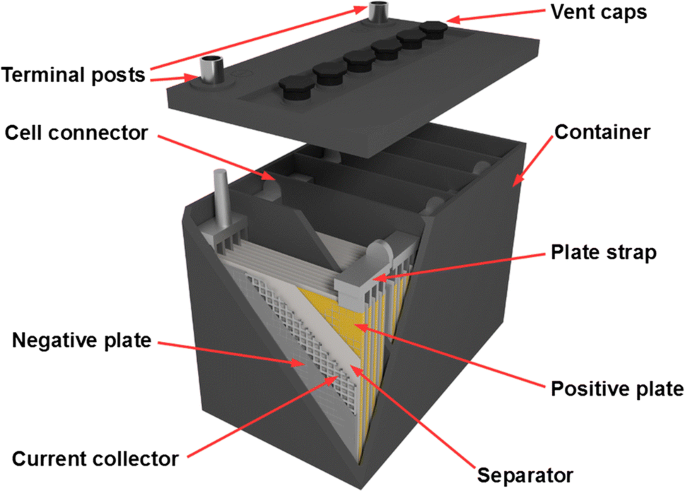
Flooded lead-acid batteries, also known as wet-cell batteries, are the most traditional type of lead-acid battery. These batteries consist of lead plates submerged in a liquid electrolyte (sulfuric acid and water).
Sealed lead-acid batteries include Absorbent Glass Mat (AGM) and Gel batteries, which are designed to be maintenance-free. These batteries use a non-liquid electrolyte (either absorbed in a fiberglass mat or suspended in a gel) to prevent spills and gassing.
Deep-cycle lead-acid batteries are designed to discharge deeply without damaging the battery, making them ideal for continuous backup power applications.
Proper maintenance of lead-acid batteries is crucial to ensuring the reliability of backup power systems. Below are some best practices to extend the life and performance of lead-acid batteries used in critical infrastructure:
Check battery voltage and charge levels regularly to ensure that the battery is functioning correctly. Monitoring the temperature, charge cycles, and electrolyte levels (for flooded batteries) can help identify issues before they lead to system failure.
Especially for flooded lead-acid batteries, ensure that the battery storage area is well-ventilated to prevent the buildup of hydrogen gas, which could be hazardous. Sealed batteries still require some ventilation to allow for normal gas exchange, but the risks are less significant.
Both overcharging and deep discharging can shorten the lifespan of lead-acid batteries. Use a regulated charger and monitor the discharge cycles to ensure the battery is neither overcharged nor discharged too deeply.
Ensure that the batteries are stored and operated within their recommended temperature range. Extreme temperatures—both hot and cold—can negatively affect battery performance, reducing efficiency and lifespan.
Perform load tests to ensure the battery is capable of delivering the required power during an outage. Load testing helps assess the battery’s state of health and ensures that the backup power system is ready when needed.
Lead-acid batteries remain a reliable and cost-effective choice for providing backup power to critical infrastructure. With their proven performance, scalability, and availability, they continue to support essential services across industries such as healthcare, telecommunications, and utilities. By choosing the right type of lead-acid battery and maintaining it properly, organizations can ensure that their critical infrastructure remains powered, even during unforeseen power outages or grid failures.
Spaceflight Power was founded in 1994 and named Zhongshan Spaceflight Power supply Co,. Ltd. In 2006, the company’s production base moved to Jiangxi Province for a larger production space with 120,000 square meters.
Learn About Spaceflight Power Learn About Spaceflight PowerCopyright © 2026 - Spaceflight Power Supply Co., Ltd. ALL RIGHTS RESERVED Shipping PolicyReturn PolicyPrivacy Policy